Francis Bacon’s “Painting (1946)”
I finally got to see my favorite painting ever, Francis Bacon’s “Painting 1946” at the MoMa.
Earlier in the year I saw some works of the renowned artist & personal inspiration, Francis Bacon, at the MoMa. But to say I merely saw them is an understatement. 31 years after his death, Bacon’s paintings sent me on a surrealist trip only the likes of Hunter S. Thompson could aptly describe. There is something in Bacon’s haunting and violent brushstrokes that confronts human nature at its core. Bacon’s paintings presuppose the idea that art should provoke complex and intense emotional responses buried in the psyche, oftentimes coinciding with the darker aspects of the human equation.
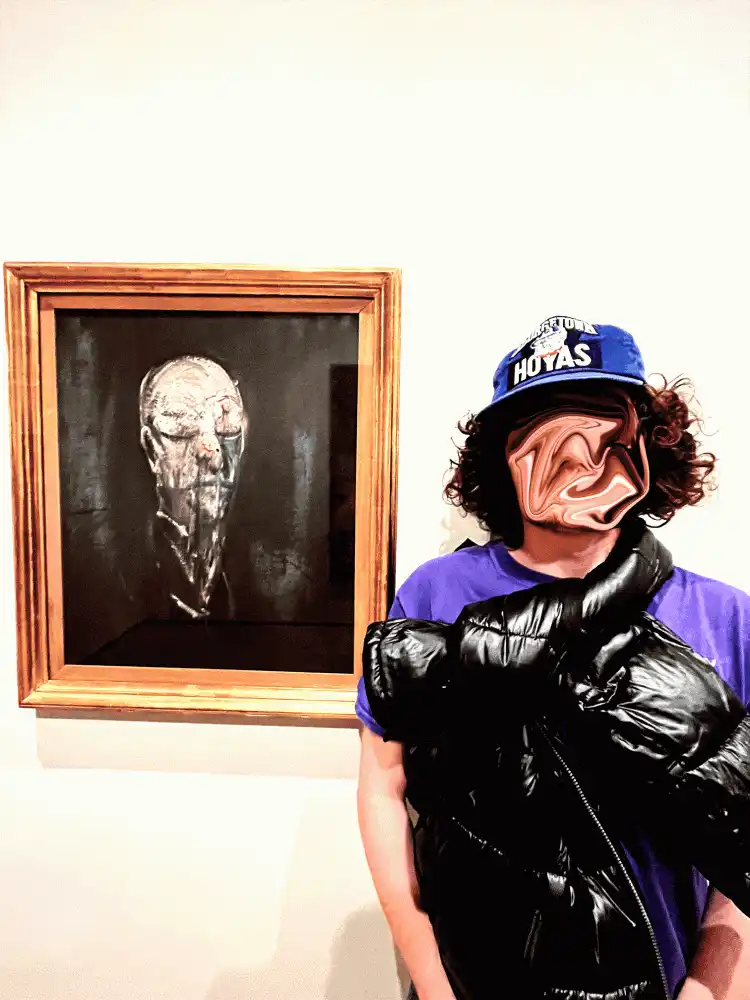
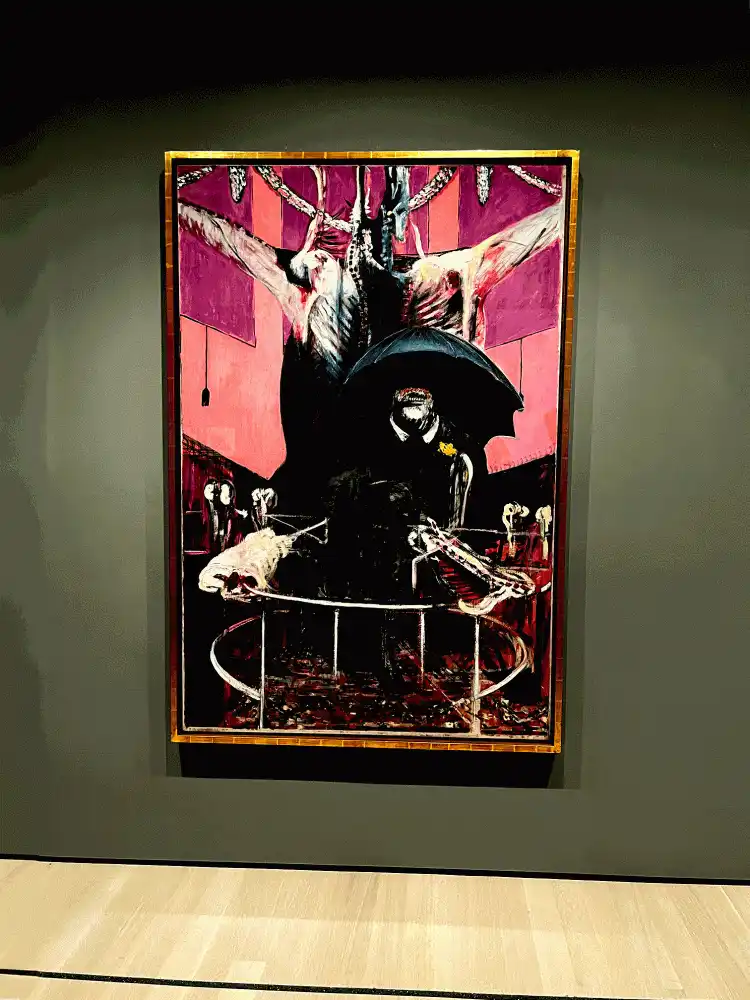
“Painting (1946)” famously captures Bacon’s aesthetic, depicting a terrifying scene where an anonymous individual oversees the butchery of meat that looks vaguely human. Though Bacon denies this, as he denies imprinting any such narratives onto his art, many people believe the half-faced individual is former UK prime minister Nevile Chamberlain, who took office directly after Churchill amid WW2. Chamberlain is infamous for his “Appeasement policy”, which gave Nazi Germany certain parts of Eastern Europe in return for the UK’s freedom. Whether or not the figure is Chamberlain the conversation remains. This painting confronts life post-WW2 by mirroring the trauma and existential dread festering Europe at the time. The cage-like structure surrounding the individual, the microphones off to either side of him, and the umbrella masking his face, evoke anxiety trademarked by the time.
Painting (1946) is a testament to Francis Bacon’s ability to convey profound emotions and present human nature like none other. His visceral paintings transcend the art form itself by assaulting the audience with the truth of their existence. In doing so, Bacon pushes the boundaries of what it means to express oneself, leaving an imperishable impression on the art world.