
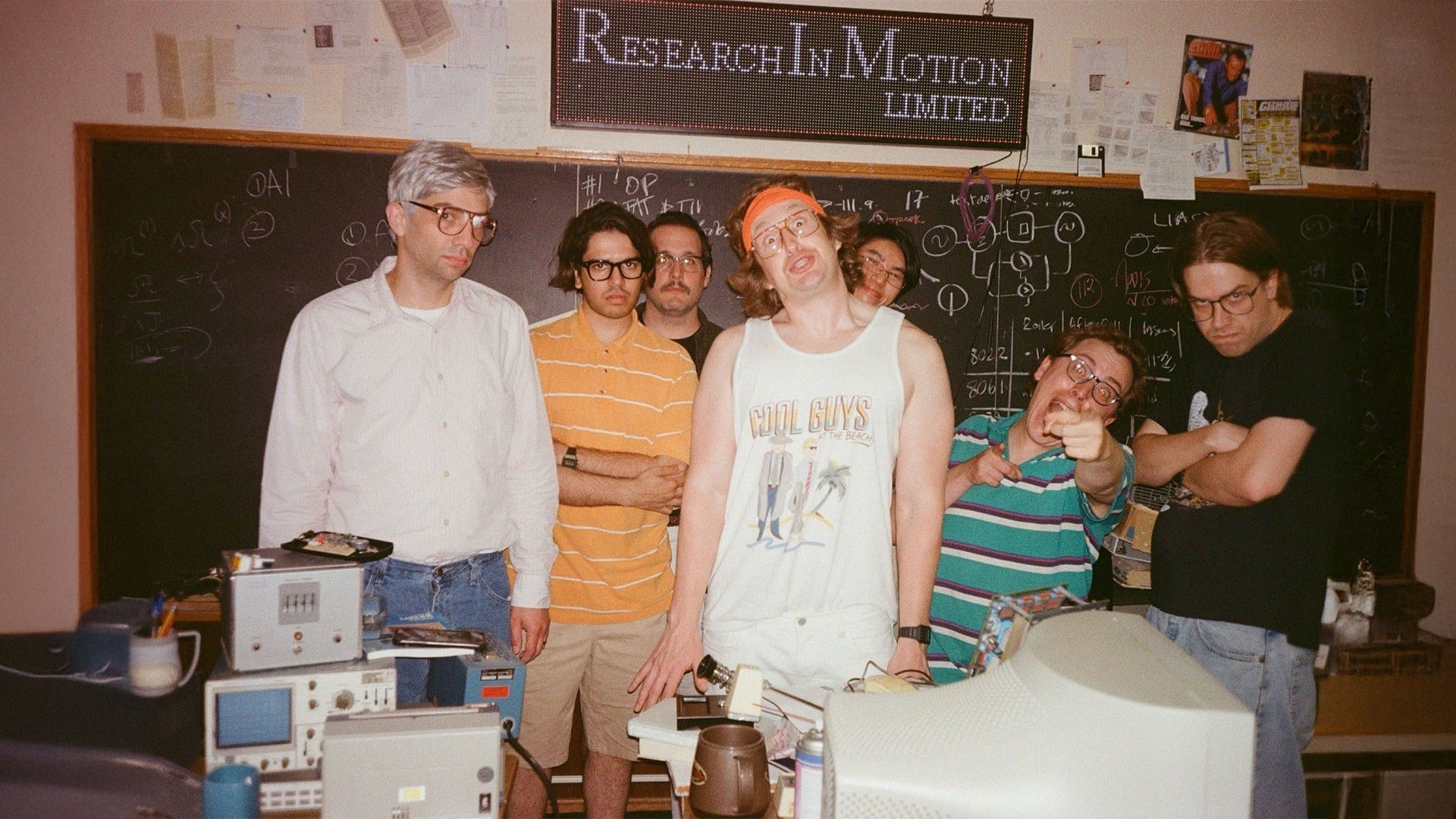
What makes Matt Johnson’s “Blackberry” so important to Canadian art history
My job as an artist is to connect the myths of my country with the future– Bjork.
That is a quote I first heard in an interview with Matt Johnson, the director of Blackberry, a movie about the invention of the world’s first smartphone in Waterloo, Ontario. Although Canada’s history is just as rich and diverse as many other nations we’re so accustomed to hearing about, it doesn’t get the same level of respect, at least from Hollywood’s perspective. So, when Matt Johnson set out to create the true story of Blackberry, he not only created one of the films of the year but also helped tell Canada’s story as a key player in modern history.
Of course, it’s the real-life Mike Lazaridis, Douglas Fregin, and Jim Balsillie who are responsible for the technological revolution that was Blackberry. However, as Yuval Noah Harari says, it’s the stories we tell that define us as humans.
You could never convince a monkey to give you a banana by promising him limitless bananas after death in monkey heaven.
― Yuval Noah Harari, Sapiens: A Brief History of Humankind
Therefore, without Matt Johnson’s exceptional storytelling of the drama of Blackberry, Canada’s prominence in the most recent technological revolution would still be a stone left unturned in the eyes of the public. The way Matt Johnson captures late 90’/early 00’s Ontario and the impending cyber-race led by a few Canadian nerds evokes nostalgia and inspiration that can be felt not only by our country’s people but by the world, for decades to come.
What Makes Blackberry Special?

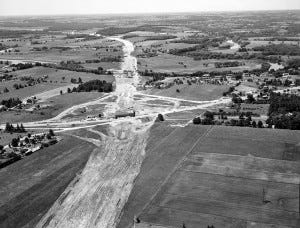
Starting from the very first shot in the film Matt Johnson places his Canadian audience into a time machine by relaying radio broadcasters’ commentary after a trademark Toronto Maple Leafs loss over a drive west on the 401. Anyone growing up in Ontario at this time is more than accustomed to hearing the groans of our city’s sportscasters over our car’s speakers early in the morning while driving through the endless factories and farmlands that make up this part of the highway.
This contrast making up the stretch of land from Toronto to Waterloo is the perfect analogy for Matt Johnson’s film. The way these obscene factories abruptly jam themselves in between and displace Canada’s abundant agriculture in the name of efficiency is very much akin to Jim Balsillie and the rest of Blackberry’s rise to glory, and their tragic demise.

We all know how the Industrial Revolution came to be, through its efficiency and stability it proved to be a better system than the agricultural systems dominating the world at the time. Blackberry used these same advantages to take over the phone market at the beginning of the 21st century. Led by the intellectual prowess of Mike Lazardis and the ruthless business skills of Jim Balsillie, Blackberry managed to mass-produce the most efficient and stable phone in the world from the little-known Canadian city of Waterloo.
If you’ve ever been to Waterloo you probably find it just as amazing as I do how Blackberry managed to (illegally) recruit the world’s smartest engineers and developers to this little city about an hour west of Toronto. Waterloo doesn’t have much going for it if you’re not a college student looking to drink the weekend away. Yet at the start of the 21st century, Waterloo, Ontario was the technological capital of the world.
Thanks to the tyranny of Jim Balsillie that would scare the likes of Dracula, the capital of Blackberry’s empire, Waterloo, Ontario, was thriving. Tech geniuses were migrating to the city by the hundreds to play their part in this technological revolution and venture capitalists were flying in their private jets begging Blackberry to take their money.
However, as soon as the company rose to fame, their hubris got the best of them, and they crashed and burned twice as fast. The trademark efficiency Blackberry became known for started to lag behind its competitors and its market share began to dwindle. To retake their position Blackberry sought greater levels of efficiency by moving their manufacturing to China, abandoning not only their Waterloo headquarters but their principles in the process.
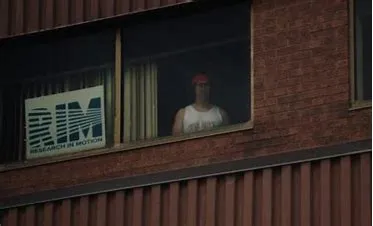
“Made in China, the mark of the beast”
– Douglas Fregin (Blackberry, 2023)
One of the first sentences said by Matt Johnson’s character at the beginning of the film. Sure Blackberry’s move to China increased the quantity of their product, however, it was a critical blow to their quality. Cutting corners in respect of the chase for greater efficiency and profit margins is what brought Blackberry its success, but it’s what led to its downfall as well, making this story a Greek tragedy in every sense of the definition.
Blackberry as Canadian History

It’s important to remember Canada’s level of responsibility regarding the degree of technological innovation taking place today. Without Matt Johnson’s storytelling, this fact could easily slip through the cracks of history. This is why I find this film so important not just to Canadian film history, but to modern Canadian history.
I don’t mean to compare Blackberry to other great Canadian movies like Goin’ Down the Road (1970). However, that’s the beauty of art. You aren’t supposed to compare, merely to enjoy. That said I do think Matt Johnson did an incredible job bringing that Bjork quote to life; turning the myths of our country into the future through art.
