Free Will in a Fragmented Self: Exploring Determinism and Autonomy in Apple TV’s Severance
In a world where consciousness can be surgically divided, can either half truly be free?
“You feel this now, this pain? It’s real. You feel it because you’re alive, Mark S., and you are real. Only I, and Lumon, can remove your pain.”
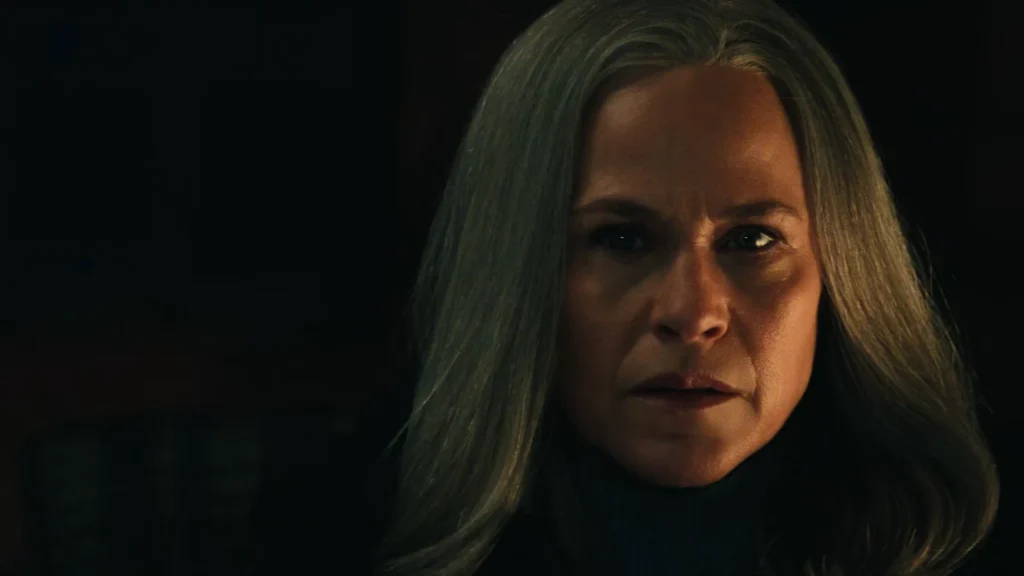
These words, uttered within the sterile confines of the Break Room, strike at the philosophical core of Apple TV’s “Severance” The scene depicts an innie (work self) being psychologically tortured through forced repetition of a corporate apology—a moment that perfectly encapsulates the show’s exploration of free will, determinism, and autonomy.
As I watched Severance, I couldn’t help but feel like I was witnessing a philosophical thought experiment come to life—one that challenges our most fundamental assumptions about consciousness, identity, and freedom. This isn’t just prestige television; it’s an existential laboratory where concepts debated by philosophers for centuries are tested through compelling narrative.
In this analysis, I’ll examine how Severance brings to life the tensions between free will and determinism, explore the fragmented nature of autonomy, and consider what it means to be free when the self is literally divided.
The Philosophical Cage: Determinism in the Severed Floor
Spinoza’s Determinism and the Innies’ Reality
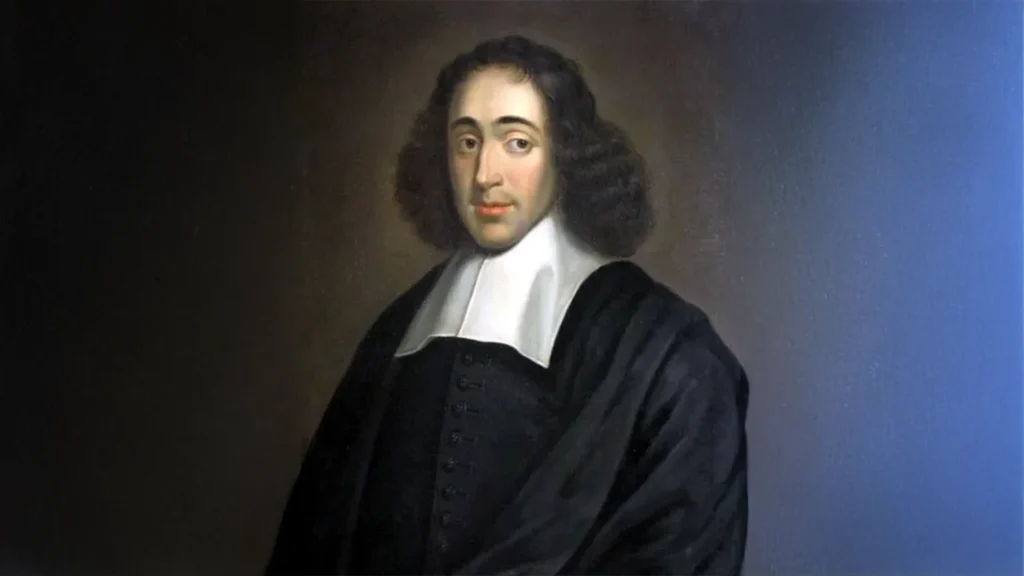
Baruch Spinoza, the 17th-century philosopher, argued that free will is essentially an illusion—that humans are part of a larger deterministic system governed by causality. In his view, our actions are determined by prior causes, even if we perceive ourselves as making free choices.
The severed floor at Lumon Industries functions as a perfect Spinozist environment. Here, the innies exist in a tightly controlled ecosystem where every aspect of their experience is deliberately engineered:
Their physical movements are restricted to designated areas
Their knowledge is limited to what the company permits
Their social interactions are carefully monitored
Their emotional responses are manipulated through rewards (waffle parties, finger traps) and punishments (the Break Room)
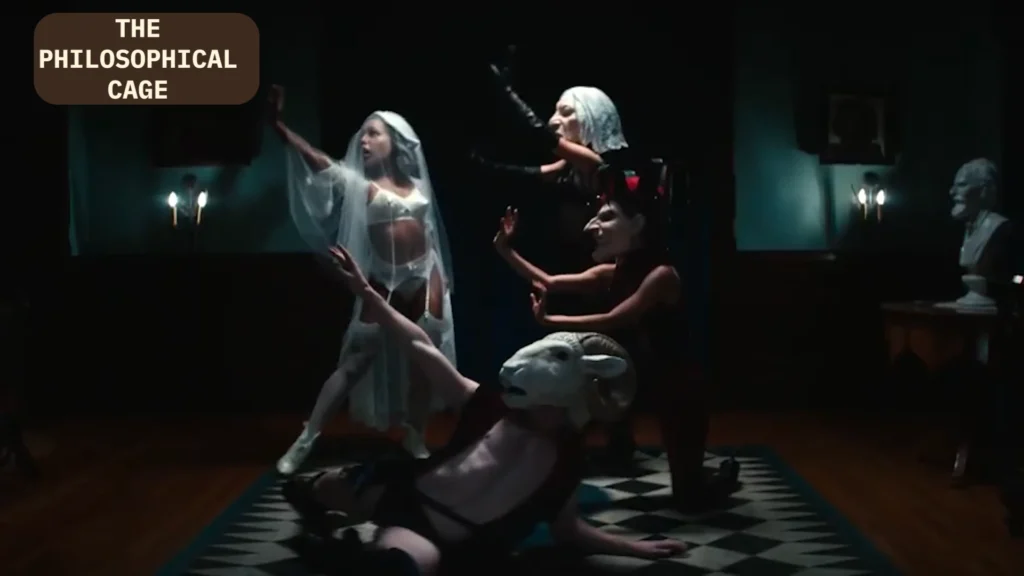
When Helly R. repeatedly attempts suicide, only to have her outie record a video message telling her she will never be allowed to leave, we witness determinism in its most brutal form. Her attempts at exercising free will are systematically thwarted by forces beyond her control.
As Helly pleads in one devastating scene: “I’m a person; you can’t just keep me here!” The response, delivered through her own outie, is chilling: “I’m happy here… please stop sending resignation requests.”
This interaction perfectly illustrates Spinoza’s determinism—Helly’s innie can attempt resistance, but ultimately, her agency is constrained by pre-existing conditions she cannot control.
Laplace’s Demon and Lumon’s Surveillance State
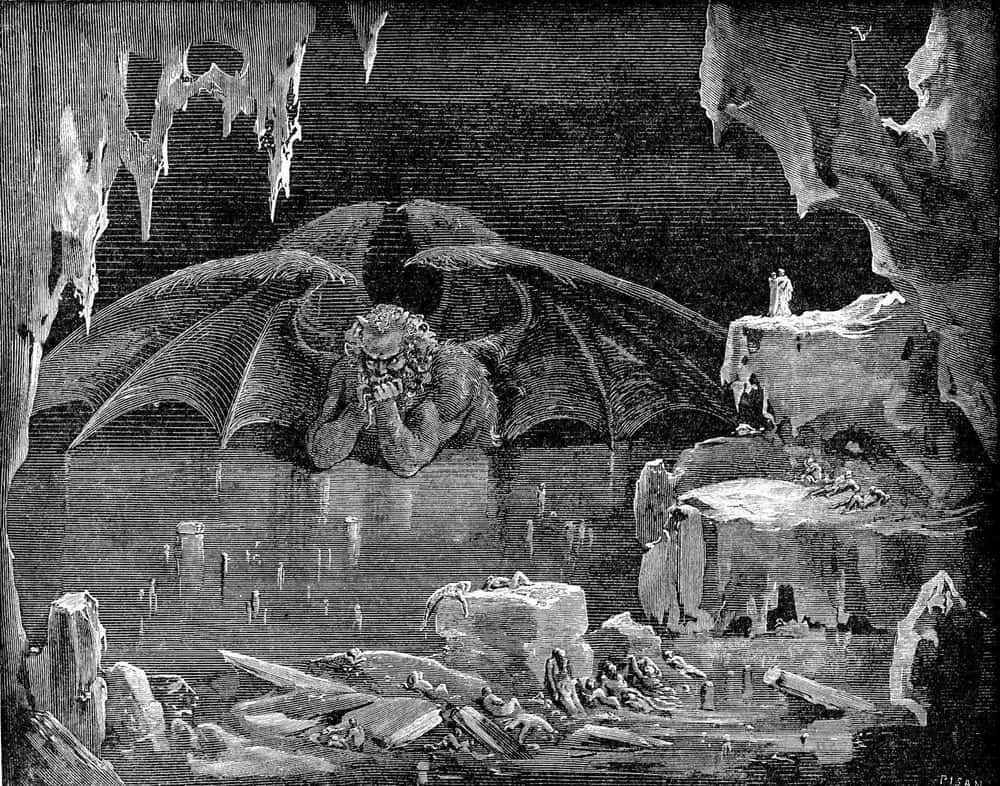
Pierre-Simon Laplace proposed a thought experiment involving a hypothetical demon who, knowing the precise location and momentum of every atom in the universe, could calculate all future events with perfect precision. On the severed floor, Lumon assumes this demonic role, approaching omniscience through:
Constant surveillance of the innies’ activities
Detailed tracking of their emotional states and productivity
Controlled information flow limiting what they can know
Physical architecture designed to control movement
The scene where Dylan discovers the security room—with its control panel capable of activating different modes of consciousness—reveals the extent of this deterministic control. Lumon doesn’t just monitor the innies; it can actually manipulate which version of consciousness is activated at any moment.
This surveillance apparatus transforms the severed floor into a deterministic cage where the variables (environment, knowledge, stimuli) are controlled to produce predictable outcomes—a human Petri dish where the illusion of choice masks the reality of determination.
Resistance in Confinement: Free Will Against All Odds
Sartre’s Existentialism and the Innie Rebellion
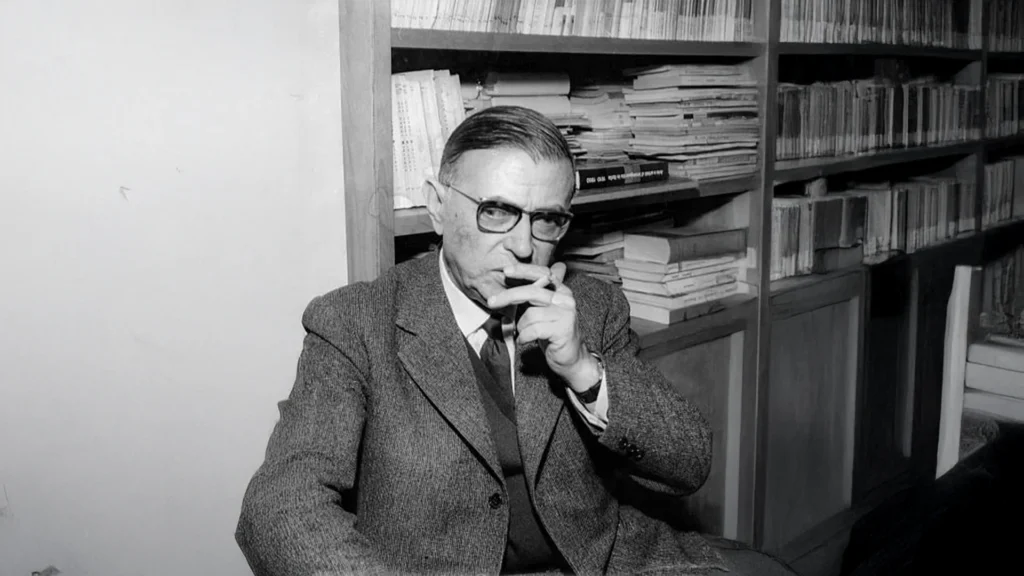
Jean-Paul Sartre would argue that freedom exists even in the most confined circumstances. For Sartre, existence precedes essence—meaning we define ourselves through our choices rather than being defined by predetermined qualities.
Mark, Helly, Irving, and Dylan’s gradual rebellion against Lumon represents a Sartrean exercise of freedom. Despite their constrained environment, they manage to:
Form genuine connections with each other
Question the nature and purpose of their work
Develop curiosity about the outside world
Coordinate acts of resistance
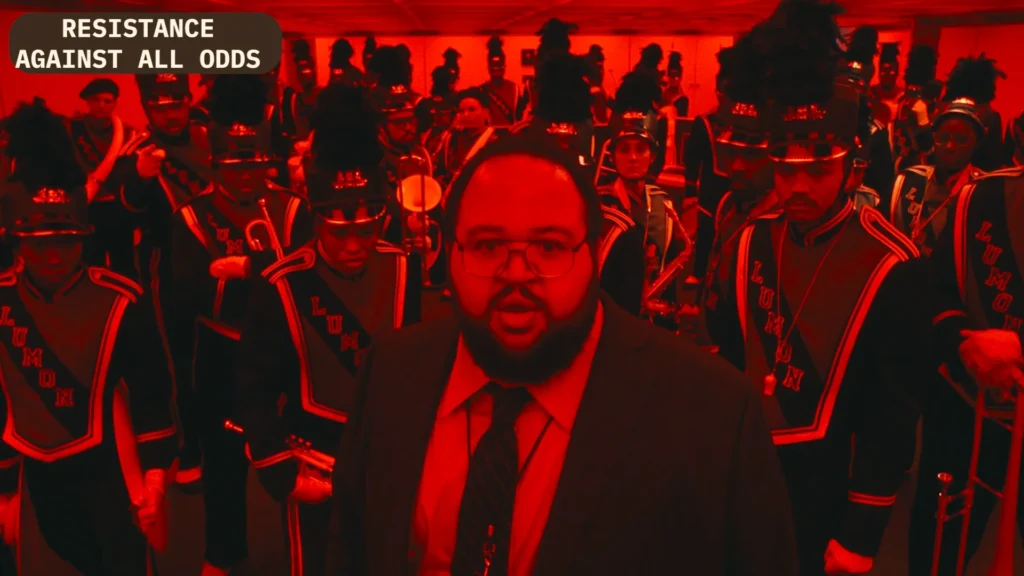
The pivotal moment comes when the team discovers the Overtime Contingency—the ability to temporarily awaken an innie in the outie’s world. This discovery represents a crack in the deterministic system, allowing for genuine choice.
When Dylan sacrifices his opportunity to learn about his outie life to instead help his friends, we witness what Sartre would call an “authentic choice”—a decision made with full awareness of its consequences that defines who he is. Dylan chooses solidarity over self-interest, exercising free will in defiance of the system designed to control him.
Kant and the Innies’ Moral Rationality
Immanuel Kant argued that free will is tied to rational moral agency—our ability to act according to principles we set for ourselves. For Kant, freedom isn’t about doing whatever we want but about acting rationally according to moral law.
Despite being denied information about themselves and the outside world, the innies gradually develop moral principles that guide their rebellion:
Mark maintains his skepticism and intellectual curiosity
Helly refuses to accept her imprisonment
Irving pursues truth about the company’s history
Dylan seeks connection with his unknown children
In one telling scene, after discovering a coworker being “reset” (essentially mind-wiped), Mark comments: “Whatever they’re doing, they shouldn’t be doing it to people.” This simple moral judgment, arrived at through rational consideration despite limited information, exemplifies Kant’s concept of autonomy—the ability to derive moral principles through reason, even in oppressive circumstances.
The Divided Self: Can Fragmented Consciousness Be Autonomous?
Mill’s Harm Principle and the Ethics of Severance
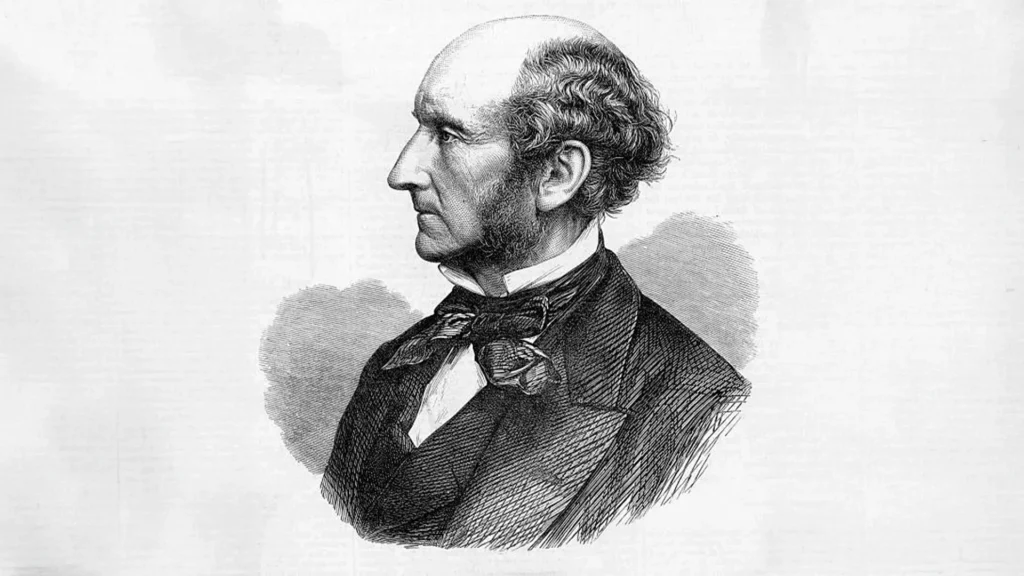
John Stuart Mill’s harm principle states that individual liberty can only be justifiably limited to prevent harm to others. The severance procedure creates an ethical paradox: the outie consents to the procedure, but this consent directly harms another consciousness—the innie.
The outies of Severance commit what philosopher Derek Parfit might call “future self harm”—only in this case, they’re harming a partitioned version of themselves rather than their future self. This raises questions about consent:
Can one version of consciousness consent on behalf of another?
If the innie never had a choice, was genuine consent ever possible?
Does the outie’s “freedom” come at the expense of the innie’s imprisonment?
When post-reintegration Petey tells Mark, “They’re taking people’s souls, Mark… dividing them in half,” he’s articulating the core ethical problem through Mill’s lens—the severance procedure fundamentally harms people by fragmenting them, violating the harm principle regardless of consent.
Frankfurt’s Hierarchy of Desires and the Severed Will
Harry Frankfurt proposed that autonomy involves aligning our actions with our “second-order desires”—our desires about what we want to desire. The severed state creates a profound disconnect in this hierarchy:
The outie may have a second-order desire to be productive at work without emotional involvement
The innie has no access to these second-order desires, operating with first-order desires disconnected from the outie’s values
Neither self is fully autonomous because neither has access to the complete set of desires that would constitute a whole person
This severed hierarchy of desires manifests dramatically when we learn Helena Eagan (Helly’s outie) is actually an Eagan family member who underwent severance as a publicity stunt. Her outie’s second-order desire (to promote severance as ethical) directly conflicts with her innie’s first-order desire for freedom.
When asked why she hates her innie, Helena responds: “She’s not a person… she’s me without the context that makes me me.” This chilling statement reveals how the severance procedure creates what Frankfurt would consider a profoundly non-autonomous state—neither self has the necessary context to align their actions with their complete set of values.
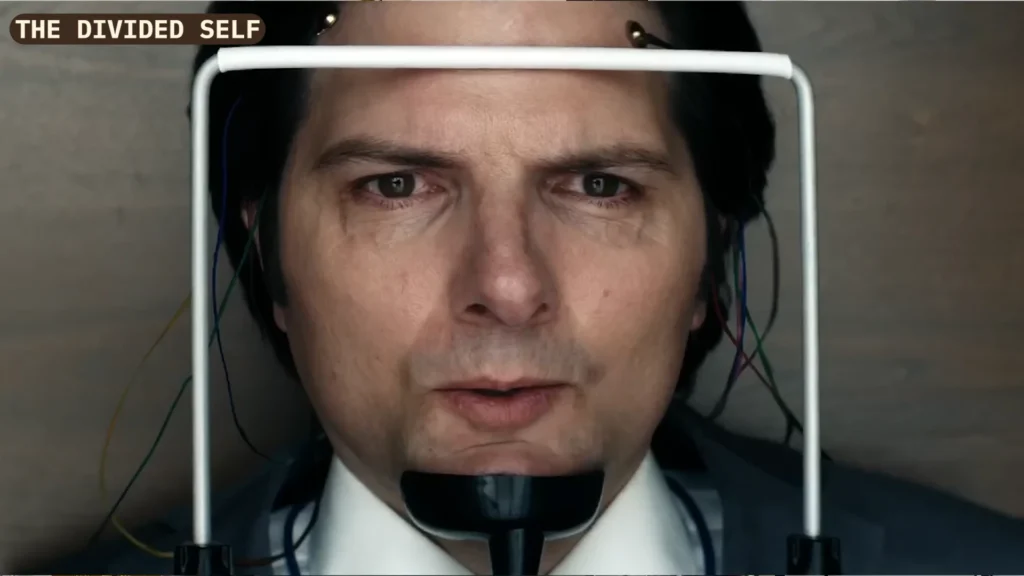
The Cage Within: Innies’ Constrained Autonomy
Kant’s Rationality and the Information Deprivation
For Kant, autonomy requires access to information—we can only make rational choices when we understand the context and consequences of our actions. The innies are systematically denied this context:
They don’t know who they are outside work
They don’t understand the purpose of their mysterious work
They can’t access memories of their personal history
They lack knowledge of the outside world
When Irving discovers a testing room containing a terrified, newly-severed employee, his horror stems from his growing realization that their autonomy is fundamentally compromised. The scene represents what Kant would consider a profound violation of human dignity—people being used merely as means (workers) rather than respected as ends in themselves (complete persons).
Hobbes and the Social Contract of the Severed Floor
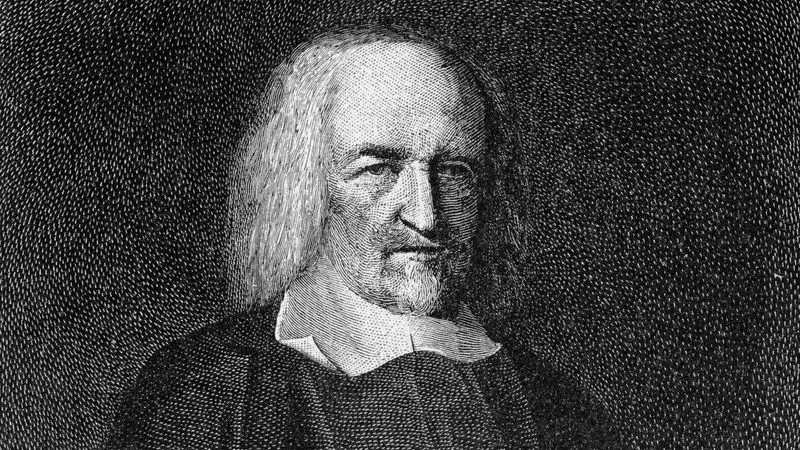
Thomas Hobbes famously argued that freedom is the absence of external impediments to motion—in other words, freedom means not being physically prevented from doing what you want to do. By this definition, the innies are profoundly unfree:
They cannot leave the severed floor
They are physically restrained if they attempt to escape
Their movements are tracked and restricted
Their bodies are literally controlled by different consciousness outside work hours
The severed floor represents what Hobbes would consider an artificial state—one where the natural liberty of humans is constrained by artificial boundaries. The difference is that, unlike Hobbes’ social contract where citizens surrender some freedom for security, the innies never consented to this arrangement.
As Mark’s innie gradually discovers his outie’s grief over his wife’s death, we witness his growing awareness of this lack of consent. The company has exploited his outie’s emotional vulnerability to establish control over his innie—a perversion of any legitimate social contract.
Integration as Liberation: Toward a Unified Consciousness

One of the most profound philosophical statement of Severance comes through Petey, who manages to reintegrate his severed selves. His painful but enlightening experience suggests that true autonomy requires integration—a unified consciousness that can access all aspects of the self.
Reintegration represents:
The reunification of episodic memory (knowing one’s complete history)
The alignment of conflicting desires (resolving the tension between innie and outie)
The restoration of context necessary for meaningful choice
The regaining of a coherent personal narrative
When Petey tells Mark, “There’s a whole world out there… I’ve seen both sides, and I’m choosing to stay integrated,” he’s making a claim about the relationship between integration and autonomy. True freedom, Severance suggests, requires wholeness.
FAQ: Philosophical Questions About Severance
Are the innies different people from the outies?
From a philosophical perspective, this depends on your theory of personal identity. John Locke would argue that identity is tied to psychological continuity and memory—by this standard, the innies and outies could be considered different people since they don’t share memories. However, Derek Parfit might argue they’re the same person in different psychological states, similar to how we might not remember our early childhood but are still the same person.
Does the severance procedure constitute a form of slavery?
By most philosophical definitions of slavery—especially those emphasizing the absence of consent and the treatment of humans as property—yes. The innies are forced to work without consent, cannot leave, and are treated as resources rather than persons. What makes this morally complex is that the “slave owner” is technically a version of themselves, creating a unique ethical problem not addressed in traditional slavery discourse.
Would reintegration be traumatic for both the innie and outie?
Probably. From a psychological perspective, reintegration would involve reconciling potentially conflicting self-narratives and values. The outie would need to process everything their innie experienced, including any resistance or rebellion, while the innie would need to assimilate the outie’s reasons for choosing severance. This reconciliation would likely involve significant psychological distress as the integrated self reconstructs a coherent identity.
Is the severance procedure a form of philosophical zombie creation?
Philosophical zombies (p-zombies) are theoretical beings that act like humans but lack consciousness. The innies clearly have consciousness, emotions, and inner lives. However, severance does create a situation where the outie might view the innie as something less than fully human—a troubling perspective that raises questions about what philosopher David Chalmers calls the “hard problem of consciousness.”
Could severance ever be ethically justified?
Under extreme circumstances, perhaps. A utilitarian might argue that if a person needed to perform crucial work that would cause them severe psychological trauma (like diffusing bombs or performing high-risk surgery), severing the work-self might prevent suffering. However, this would require truly informed consent and robust protections for the innie’s welfare. The show clearly portrays Lumon’s implementation as deeply unethical, prioritizing corporate interests over human dignity.
The Fragmented Self in Modern Society


The philosophical questions raised by Severance extend far beyond the show itself. In our increasingly compartmentalized lives, we all experience minor forms of “severance”:
The division between professional and personal personas
The fragmentation of attention across multiple digital environments
The compartmentalization of knowledge in specialized fields
The temporal severance of our present self from our past and future selves
What makes Severance so philosophically compelling is how it literalizes these metaphorical divisions, forcing us to confront the implications of our fragmented existence. When we adopt a “work personality” different from our “home personality,” are we engaging in a mild form of self-severance? Do our different social media personas represent a fragmentation of our unified self?
As philosopher Galen Strawson argues, the very notion of a single, continuous self might be illusory—perhaps we are all, in some sense, “severed” from moment to moment, constructing an artificial narrative of continuity to make sense of our disjointed experiences.
Conclusion: Freedom Through Integration
Severance ultimately suggests that true autonomy requires integration—a wholeness of self that allows for informed, contextual decision-making. The show’s narrative arc bends toward reintegration as liberation, implying that the severed state is fundamentally one of compromised freedom.
This perspective aligns with holistic philosophical traditions that view humanity as necessarily unified—from Aristotle’s concept of eudaimonia (human flourishing through the realization of one’s full potential) to Eastern philosophical traditions emphasizing the integration of mind, body, and spirit.
The final episode of the first season’s cliffhanger, with innies temporarily awakened in their outies’ lives, represents not just a plot twist but a philosophical statement: only through confronting our whole selves, with all their contradictions and complexities, can we move toward genuine freedom.
I wonder—what parts of ourselves have we “severed” in our daily lives? What would it mean to reintegrate these fragments into a more cohesive whole? Perhaps the most valuable philosophical lesson of Severance is that true freedom comes not from escape or division, but from the courageous act of becoming fully ourselves.
What aspects of your life feel “severed” from your core self? Do you think complete integration is possible—or even desirable—in our complex modern world? Share your thoughts in the comments below.
Related Posts:
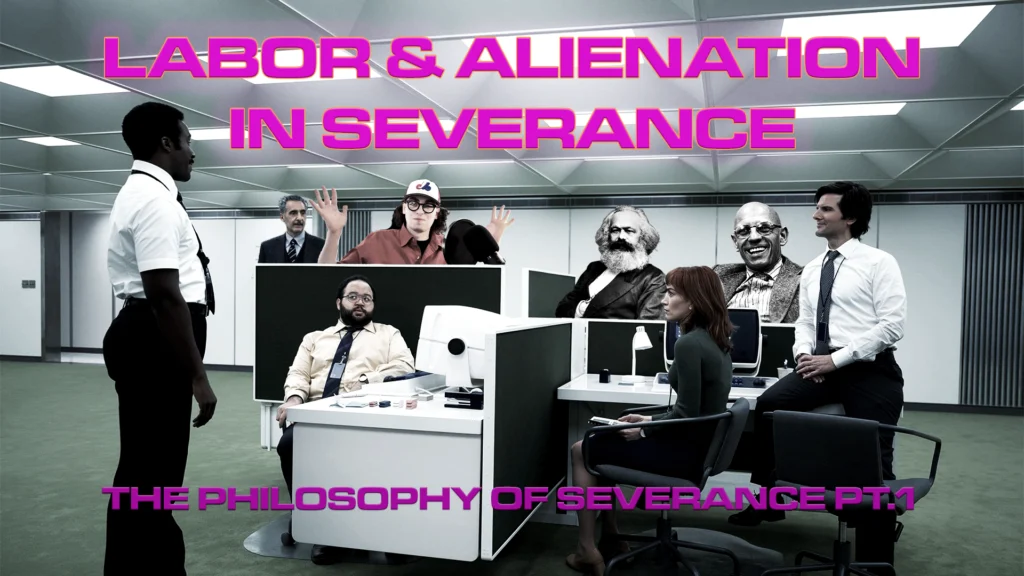
Labor and Alienation in Severance: How Apple TV’s Hit Show Brings Marx’s Theory to Life