Is Art Dead?
Being an artist in 2024 sometimes feels like working as a cashier for Blockbuster in the late 2000s. Although our jobs and livelihoods are being threatened by some intangible technological insurrection, we have no choice but to keep our heads down and push forward.
Artists tend to fall into one of two camps regarding the AI-art revolution. Some fear its inevitable fate, while others embrace it with open arms.
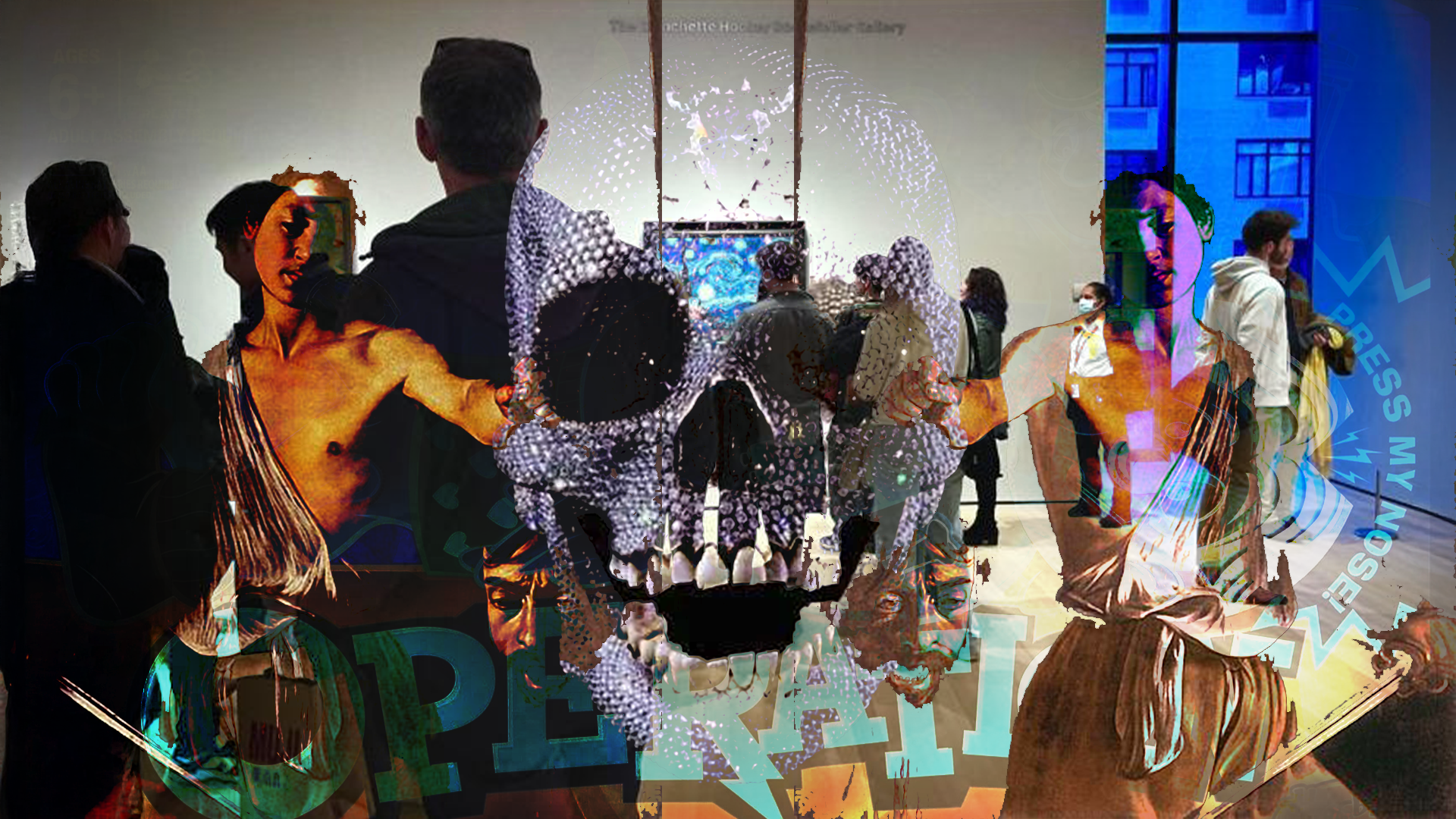
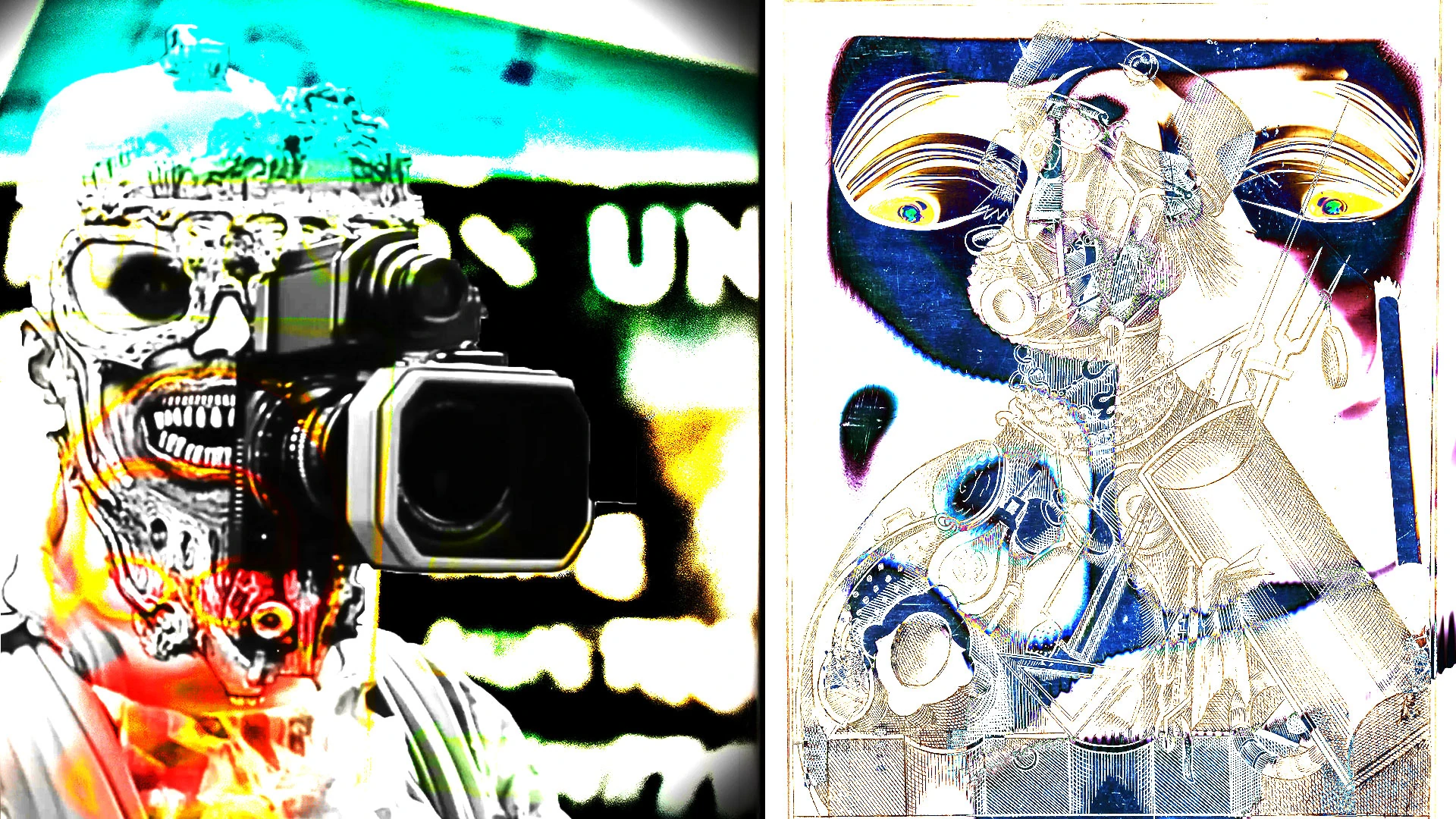
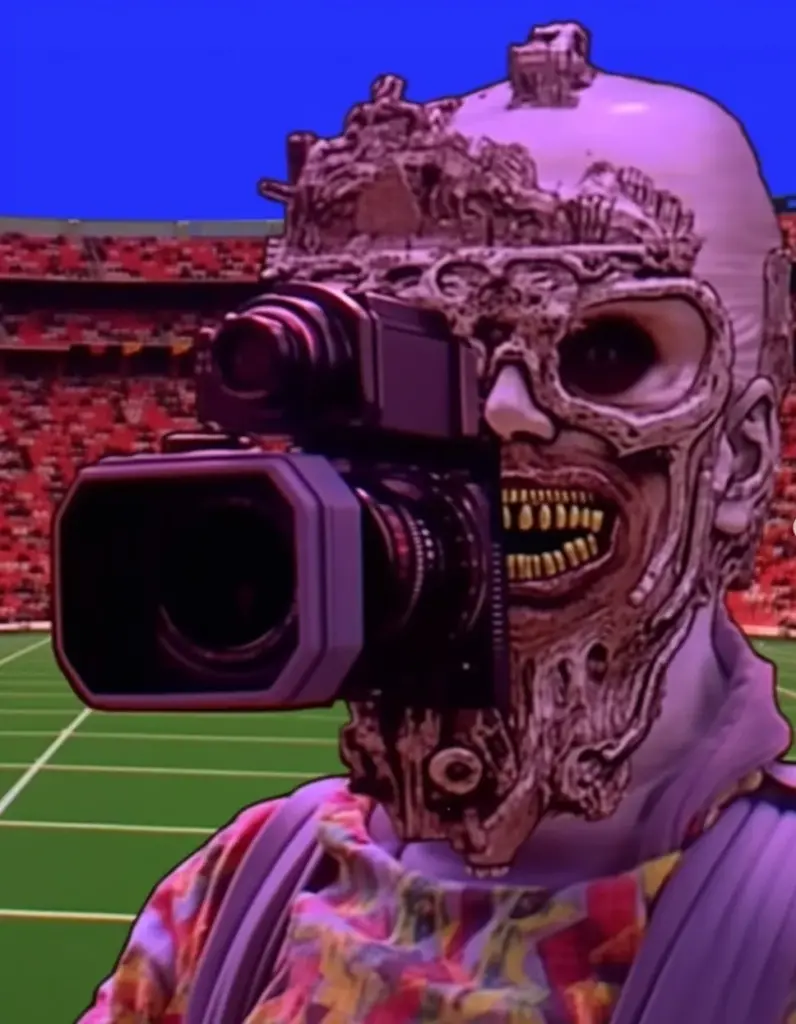
As evidenced by Face Reveal (The piece of art above), I tend to lean towards the latter camp. But I wouldn’t be honest with myself, nor an artist for that matter if I didn’t take all of my emotions into account. The fact that a computer can produce my vision in 10 seconds compared to the days, weeks, or months it takes me to sketch out my ideas is a bit disconcerting. The logical response to that is to simply use AI to produce my visions far more efficiently. But every artist knows there’s a sense of pride that accompanies the craftsmanship of each creation.
However, that assumes there’s no sense of craftsmanship in AI art. It took a level of skill on my part to maneuver AI in such a way to create Face Reveal. Moreover, I know my audience can’t recreate Face Reveal, which gives me the similar feeling of fulfillment I get as an artist creating something with my traditional skillset. If AI art produces the same quality of craftsmanship seen in traditional art, what distinguishes the two? If nothing fundamentally distinguishes AI art from traditional art is there even a point in either loving or loathing art’s impending paradigm shift? It’s these types of debates that take for granted this terrific time we as creators are currently living in, and ultimately what it means to be human.
Reading
Do Not Research ‘s article The Origin of Cyborgs, Kit Katay’s take on Donna Haraway’s 1985 essay: A Cyborg Manifesto, I was reminded of Haraway’s prescience. Haraway showed us we wouldn’t be humans if it weren’t for technology, and that it is through tech we’ll evolve beyond what it means to be ourselves. 35 odd years later our transcendence into “cyborgs” has taken a giant leap forward with the AI revolution. This AI art vs. Human art debate is futile. Instead, AI art will be viewed as an extension of our senses like any other technology. This metamorphosis of AI and Human art taking over the hyperreal is a demonstration of Haraway’s theory in action, a continuous globalized and mechanized piece of performance art, and a part of our inevitable transition into cyborgs.
Our Cyborg Transition
In Donna Haraway’s 1985 provocative essay A Cyborg Manifesto, she explores the inexorable mutation between humans and machines. Her essay concludes that this fusion is inevitable, merely a biological step in our evolutionary process. But through this transition into cyborgs, there is hope to emancipate the culture.
The term “cyborg” is a metaphor for this evolution. It represents the idea that traditional categories like human vs. machine, or tangible vs. intangible no longer provide useful context for understanding the complexities of existence. Cyborgs aren’t weighed down by traditional social norms, are not divided by race or religion, nor are they prone to prejudice. Instead, they are free from rigid identities (Haraway, 1985).
Our transition into cyborgs began when we took control of our environment. Historically, humans bent to nature’s whim. We didn’t develop fire or learn to communicate until nature dictated it was time to sacrifice our physical strength for greater mental capacity (Katay, 2024). We didn’t evolve into homo sapiens until nature presented us with the opportunity. Today though, we are now the masters of our environment. We are using technology like CRISPR-Cas9 to reprogram the code in our genes, developing sustainable synthetic biological organisms. Destroying natural ecosystems in the name of profit, building artificial ones like the internet to satisfy our rates of consumption. No longer do we abide by environmental constraints like space and time, the only thing holding us back is ourselves.
When we are the masters of our environment and its pressures, and wield the resources and power to change them, we choose what we become. A generation of social-technological interference could alter human genetics forever”(Katay, 2024).
35 years later, is this cyborg epoch Donna Haraway predicted as much of a techno-utopia as she hoped it’d be? Thanks to technology, more fluid social dynamics have flourished and hit the mainstream like feminism for example. There’s an increased focus on progressive policies in Western society. Overall, our quality of life has increased dramatically across the world.
But at what cost? The necessity of technology has paved the way for a reliance on such tools. The cyborg generation born at the crest of the information age knows no life without the internet. The internet is just as much a part of Gen-Z’s central nervous system as any other motor function. Being an extension of our senses, the internet morphs into the psyche like two atoms colliding, and the result is a loss of self. In an act to keep up with the current tech, take part in trends, and stay connected, we chip away at our identity and replace it with the melting pot that is the internet. Haraway was right in that the cyborg evolution would replace such rigid identities, however, replacing the self with the cyborg is conforming by nature.
The Cyborg Artist
Have you ever considered how we are in a ”loneliness epidemic” despite being in the most connected time in history? When you consider the implications of this reliance on technology the answers seem pretty obvious. Sacrificing one’s identity can have disastrous consequences psychologically. The constant pressure to conform leading to the loss of identity means we aren’t communicating substance, merely spewing the same string of propositions with slightly different sentence structures. No wonder society feels so lonely when everyone’s on the internet reposting the same talking points and repeating the same trends, slowly pushing culture forward a millimeter at a time. Instead of being the culture mover social media was once advertised as, every day it gets closer to realizing its potential as one gigantic mirror for society to gawk at, which is a poetic metaphor for the birthplace of the selfie.
The rampant, unfiltered technological revolution has ushered society into a new epoch and the results are unpredictable. Who would have thought the result of instantaneous communication is a loneliness epidemic? What it means to be a human has an entirely different meaning compared to 1000, 100, or even 10 years ago. Therefore these masochistic news cycles perpetuating seemingly benign debates like human art vs AI art are meaningless. We aren’t humans, we are cyborgs. And art is merely just a fragment of this paradigm shift. Just like any other industry, sheer efficiency and the impulse for profits will take precedence over any sentimentality. The reality is artists have no choice but to adapt. This may be daunting, but just as Donna Haraway predicted, more than anything it will be liberating.
To understand the role of the cyborg artist in the information age we have to recontextualize what art means today. Historically, art’s foundation was in religion (Benjamin, 1969). The bigger the impact a work of art had on its theology, the more valuable society deemed it. However, this took a drastic shift amidst the Industrial Revolution as art’s value was shaped in a different context. Instead of being based on a religious “cult” value”, the newfound ability to mechanically reproduce art meant we could disperse it globally, and as a result, the messages embedded within a work of art would spread like wildfire. Essentially, while the Industrial Revolution emancipated art’s reliance on religion, it replaced it with another artificial value, a political one. All of the most famous works of art within the Industrial Revolution have some sort of political ideology, whether intentional or not; Think of Picasso’s Guernica, Warhaol’s Campbell’s Soup, or Bacon’s Pope.
So, if the Industrial Revolution led to the politicizing of art, what does that mean for this impending technological revolution? On one hand, more tech = more politics. The faster we can communicate ideologies, the faster the public will gobble them up and rehash them during their work breaks and dinners. However, intuition tells me a tipping point is inevitable. Where has this idealistic political hot potato gotten aesthetics? Not very far if we’re being honest. Political-based art has led to a qualitative shift in movements like Haraway’s feminism, but quantitative issues facing society have remained, such as poverty, police brutality, and now the loneliness epidemic! In the long run, relying on AI to improve art’s political impact seems blissfully ignorant. A far more likely conclusion seems to me that this inevitable fusion of AI art and political-based aesthetics will produce ideologies far faster than humans can comprehend, and as a result will lose our appetites. The political value of art will wither away and something anew will take it’s place.
If we’re not careful, this new value propping up the aura of a work of art in the age of the AI revolution could be as simple as capital. It may sound ridiculous to deem a work of art more impactful than the next because of the money it netted. However, the media can’t help but compare box office budgets, auction prices, album sales, drilling these numbers into our brain as if it’s the art’s essence. Whether art’s newfound value hinges on capital, on followers, or on onlyfans subscribers, regardless, art is not dead, it has merely evolved. Through trial and error, my fellow cyborg artists and I will not only search for the meaning of this emergence; it’s true value, but be a driving force behind it, dancing between the mechanisms of today’s revolutionary technological advancements, and today’s most passionate human stories. If that’s not liberating, I don’t know what is.
“We must expect great innovations to transform the entire technique of the arts, thereby affecting artistic invention itself and perhaps even bringing about an amazing change in our very notion of art” – Paul Valery
References
Adorno, Theodor W., and J. M. Bernstein. “Transparencies on film.” The Culture Industry, 2020, pp. 178–186, https://doi.org/10.4324/9781003071297-8.
Benjamin, Walter. (1969). The Work of Art in the Age of Mechanical Reproduction.. In Arendt, Hannah (Eds.), Illuminations: Essays and Reflections (pp. 217-251). Schocken Books
Couto, Sarah Do. “Loneliness Is Now a ‘Global Public Health Concern,’ Says Who – National.” Global News, Global News, 16 Nov. 2023, globalnews.ca/news/10095898/loneliness-global-public-health-concern-who/#:~:text=The%20World%20Health%20Organization%20%28WHO%29%20has%20warned%20that,public%20health%20concern%E2%80%9D%20of%20loneliness%20and%20social%20isolation.
Haraway, Donna J. “A cyborg manifesto.” The Socialist Review, 1 Apr. 1985, pp. 3–90, https://doi.org/10.5749/minnesota/9780816650477.003.0001.
Katay, Kit. Kat Kitay: The Origin of Cyborgs, Do Not Research, 11 Dec. 2023, substack.com/home/post/p-122585960.
Plato. The Project Gutenberg eBook of the Republic, by Plato, Project Gutenberg, www.gutenberg.org/files/1497/1497-h/1497-h.htm. Accessed 7 Dec. 2023.
Wachowski, Lilly, et al. The Matrix.
Other links
Benny Safdie & Nathan Fielder: The Curse