Why is Everyone Copying Basquiat?: The Lack of Originality in ArtTok

April 2011

When I was 10 years old, my mom took me to see the Jean-Michel Basquiat exhibition at the AGO. Like most art-obsessed kids, I was immediately transfixed by these ginormous canvases so blatantly breaking every rule I thought I understood about art. I was having a mental orgasm trying to decode the layers of meaning woven within the art straight from Basquiat’s soul like I was Indiana Jones searching for the Kingdom of the Crystal Skull

This little snot-nosed white kid from upper-middle class Toronto was learning about the history of racism, colonialism, rampant unchecked capitalism, etc. likely for the first time in his life because Basquiat brought chaos to an industry once obsessed with order two decades prior. 

Basquiat’s art inspired a deep passion for all things radical. It taught me art is only as beautiful as the message and sanctity behind it. I no longer looked at DuChamp’s urinal, or Picasso’s cubes, or Warhol’s soup with a sense of bewilderment. I finally understood them for what they are. RADICAL & REVOLUTIONARY TRIUMPHS OF THE SOUL. 

Art became the ultimate symbol of humanity for me. When I had trouble comprehending life wasn’t fair, art reminded me it never was. Whenever I got a little down on myself or my ego got a little too strung out, art levelled me off. I studied it like a religion.

May 2025

Looking at art like a quasi-religious experience is the only way I know how to live life. So, like any passionately religious person, I can’t help but get slightly irritated to borderline irate when the essence of a work of art is manipulated for whatever reason. 

We see corporations and governments do it all the time.  To stick with the Basquiat theme, here’s Tiffany & Co using an unreleased Basquiat painting to advertise their new diamond necklace:

Jay-Z, Beyonce, & Tiffany using an unreleased Basquiat painting for their diamond campaign

This painting could’ve been one of the few paintings that changed my and millions of other people’s lives. But nope, some blood diamond company thought it’s better off sitting in their warehouse for 30 years instead. 

Boo hoo. I know I sound like the “Monster Energy is Satan” lady we all know and love. But the meaning behind a work of art is important. Stories are how we communicate. 

There are good stories and bad stories. Unfortunately, when I go on social media and come across the art that’s so popular there, the majority seems to make up the latter. 

I know I know, if Connor McGreggor was reading this he’d probably say something like “Who the fook is this guy???”. wELL aCKcHUALY, I’m OG Bubby Jaustin, Mr. McGreggor. I curated multiple exhibitions for Toronto Metro University, one of the dopest art schools in Canada, bitch. 

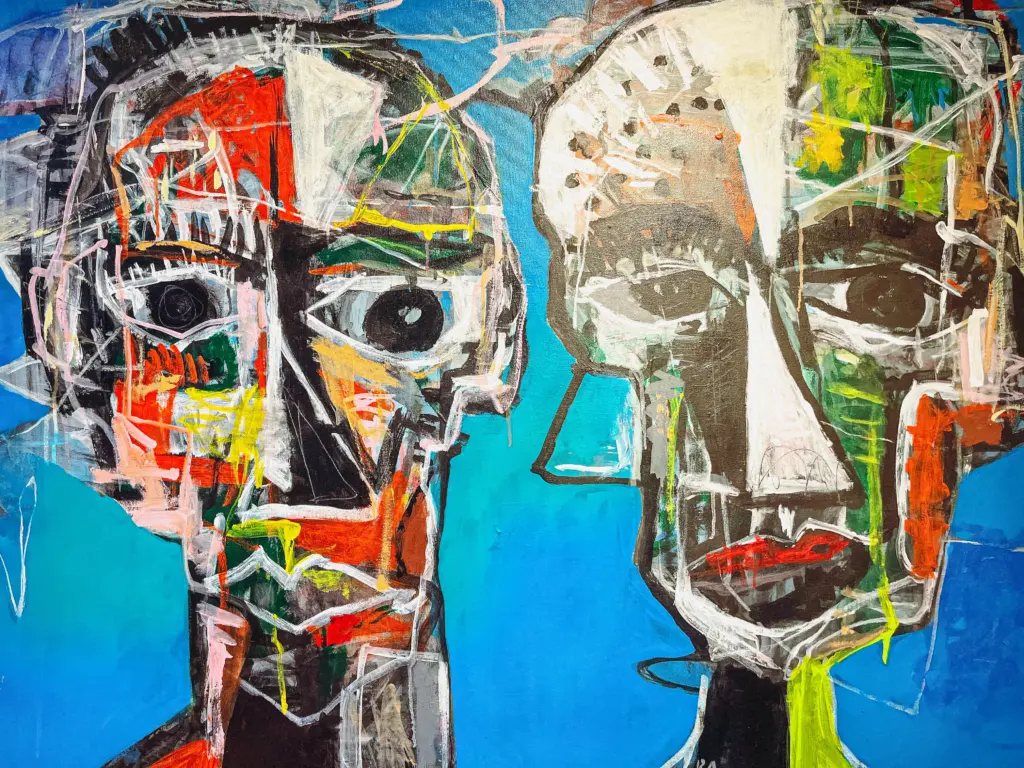
When I talk of bad “storytelling” in the art industry I merely mean redundant storytelling. We’ve all seen it. The 16 year old white kid inspired by Basquiat innocently mimicking the aesthetic with at best zero semblance of substance and at worst ignorantly racist. 

TikTok artists mimicking Basquiat's style

Although Social media likes to gang up on these people it’s hard to blame someone who doesn’t know any better. I also can’t blame social media as it’s entirely dependent on aesthetics. Of course a Basquiat or Harring copycat will rise to the top because that’s what’s popular. Radicalism doesn’t reward the algorithm.  

So if it’s not the fault of the artist nor of social media, why is it that so many people are copying Basquiat and his contemporaries? Why is the popular art on social media stuck in the past? I can tell you with confidence today’s contemporary galleries aren’t struck by this phenomenon. So why are artists choosing to abide by the algorithm instead of reality??? 

It took a lot of research but I think I’ve come up with a solution.

The Ghost of Rebellion: Mark Fisher’s Hauntology

“The past cannot be forgotten, the present cannot be remembered”

― Mark Fisher, Ghosts of My Life: Writings on Depression, Hauntology and Lost Futures

Mark Fisher’s concept of “hauntology” perfectly captures what’s happening with the Basquiat copying phenomenon on social media. For Fisher, our culture is haunted by the ghosts of lost futures—times when artistic rebellion seemed capable of creating genuine change.

Basquiat represents exactly this kind of lost possibility—a moment when art could still shock, disrupt, and manifest something truly new.

When Fisher writes about “the slow cancellation of the future,” he’s describing our current inability to produce cultural forms that don’t reference the past.

ArtTok creators aren’t just copying Basquiat’s aesthetic; they’re grasping for the rebellious energy his work once embodied, an energy that seems increasingly impossible to generate anew in our algorithmically-optimized present.

In “Capitalist Realism,” Fisher argues that capitalism absorbs and neutralizes all resistance to it.

Nothing makes this clearer than watching Basquiat’s anti-establishment art—once a genuine threat to institutional power—transform into a set of recognizable visual tropes perfectly suited for garnering likes and followers.

The radical has been domesticated, commodified, and returned to us as content.

Beyond Reality: Baudrillard’s Simulation

“We live in a world where there is more and more information, and less and less meaning.”
― Jean Baudrillard, Simulacra and Simulation

This brings us to Baudrillard’s theory of simulacra, which helps explain why these Basquiat copies feel so empty despite their technical proficiency.

Baudrillard described four orders of simulation, with the fourth being the most relevant here: representations that bear no relation to any reality whatsoever.

The Basquiat copycats on TikTok exist in this fourth order. They’re not trying to represent Basquiat’s reality or even mask its absence.

Instead, they’ve created a pure hyperreality where the “Basquiat style” circulates as a set of floating signifiers completely divorced from their original context.

The crown motifs that once symbolized Black excellence become mere design elements.

The anatomical diagrams that spoke to the exploitation of Black bodies under capitalism become trendy visual tropes.

As Baudrillard might put it, we’re witnessing the death of the original reference.

When these artists copy Basquiat, they’re not referencing Basquiat himself or the social conditions he was responding to—they’re referencing other copies of Basquiat.

This creates a closed system of reference that spirals further and further from any grounding in lived experience or political urgency.

The Performance of Art: Debord’s Spectacle

“Where the real world changes into simple images, the simple images become real beings and effective motivations of hypnotic behavior.”
― Guy Debord, Society Of The Spectacle

Guy Debord’s concept of the “society of the spectacle” completes our theoretical picture. For Debord, authentic social life is replaced by its representation.

The Basquiat copying phenomenon exemplifies this perfectly. What we’re seeing isn’t art in the traditional sense but the performance of “being an artist” for social media consumption.

Crucially, Debord’s concept of “recuperation” explains how capitalism and mainstream culture absorb and neutralize radical ideas.

TikTok has transformed Basquiat’s anti-establishment art into a trendy, marketable style—”recuperating” its revolutionary potential and rendering it harmless.

The platform doesn’t just distribute these copies; it actively shapes their production through its algorithmic incentives.

The spectacle isn’t just the images being shared but the entire ecosystem around them:

The artist performance videos showing the creation process

The engagement metrics

The comments section debates about authenticity

The merchandise links in bios

Basquiat’s actual art has disappeared, replaced by what Debord would call the “pseudo-world” of representation.

The Cycle of Cultural Recuperation

These three theoretical perspectives combine to reveal a disturbing cycle of cultural recuperation:

Authentic artistic rebellion emerges (Basquiat’s original work)

It gets stripped of its aura through reproduction

These reproductions create a hyperreal simulation (Baudrillard)

The simulation becomes spectacle for consumption (Debord)

The culture becomes haunted by the loss of authentic rebellion (Fisher)

The most important insight from this theoretical synthesis is that social media platforms aren’t neutral spaces where this copying happens to occur—they’re active agents that accelerate and intensify these processes.

TikTok’s algorithm, with its preference for visually striking, immediately recognizable content, creates the perfect environment for the flattening of Basquiat’s multidimensional critique into easily reproducible visual tropes.

What results is a situation where:

Authentic artistic rebellion becomes increasingly difficult (if not impossible)

Copies seem more “real” than originals

Art is valued not for its conceptual depth or political significance but for its ability to generate engagement

The horrifying conclusion is that these Basquiat copies aren’t just aesthetically derivative—they represent the complete inversion of everything Basquiat’s art stood for.

The Broader Implications For Contemporary Art & Culture

This Basquiat copying phenomenon isn’t isolated—it’s emblematic of a broader shift in how art functions in the digital age.

When algorithms determine visibility, authenticity becomes secondary to recognizability.

What we’re witnessing is not just aesthetic mimicry but the collapse of art’s critical function.

As social media platforms reward visual immediacy over conceptual depth, we see similar patterns of flattening across all art forms.

The tragedy isn’t just that Basquiat’s style has been reduced to a template, but that the very possibility of genuinely disruptive art becomes increasingly remote.

What This Means for Artistic Originality in the Digital Age

We find ourselves in a paradoxical moment: never have more people been creating and sharing art, yet never has originality seemed more elusive.

This isn’t about blaming young artists for copying Basquiat—it’s about recognizing the systemic forces that make such copying inevitable.

Perhaps genuine artistic rebellion today means rejecting algorithmic logics altogether—creating work designed to be unshareable, unquantifiable, or invisible to digital metrics.

Or maybe it means creating within these platforms but against their grain, using their tools to expose their limitations.

Whatever form it takes, the next artistic revolution won’t look like Basquiat’s—because it can’t. It will need to find new ways to confront a system that has already incorporated rebellion into its business model.
The Simple Beauty of the 2024 Puerto Vallarta Art Walk

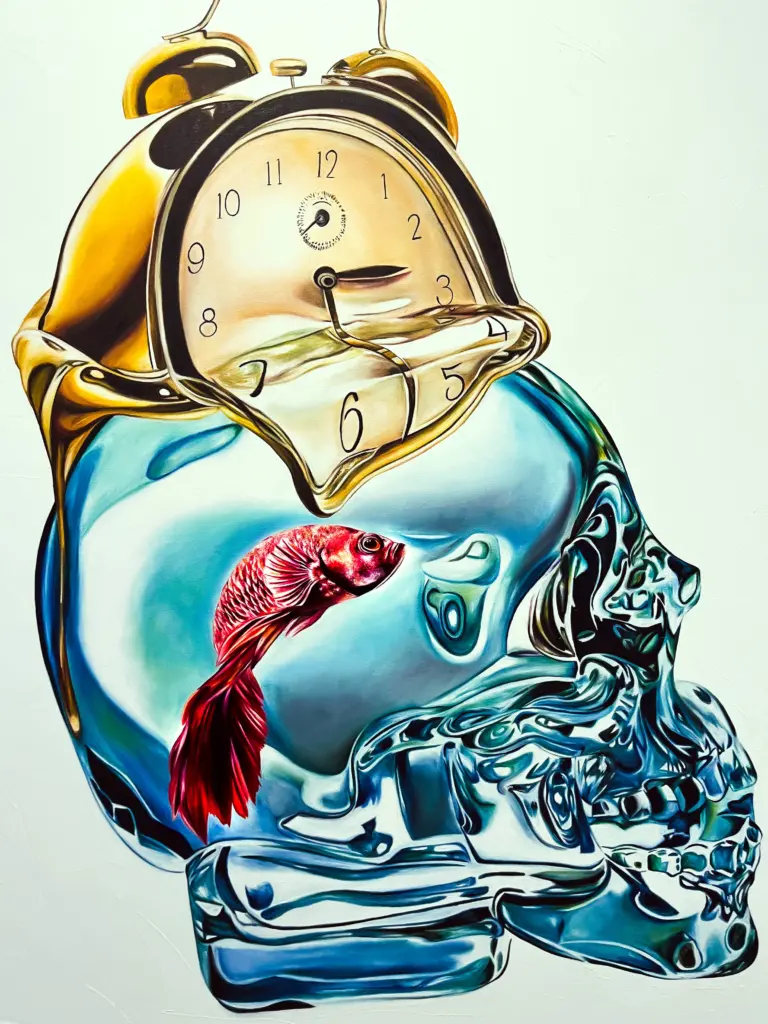
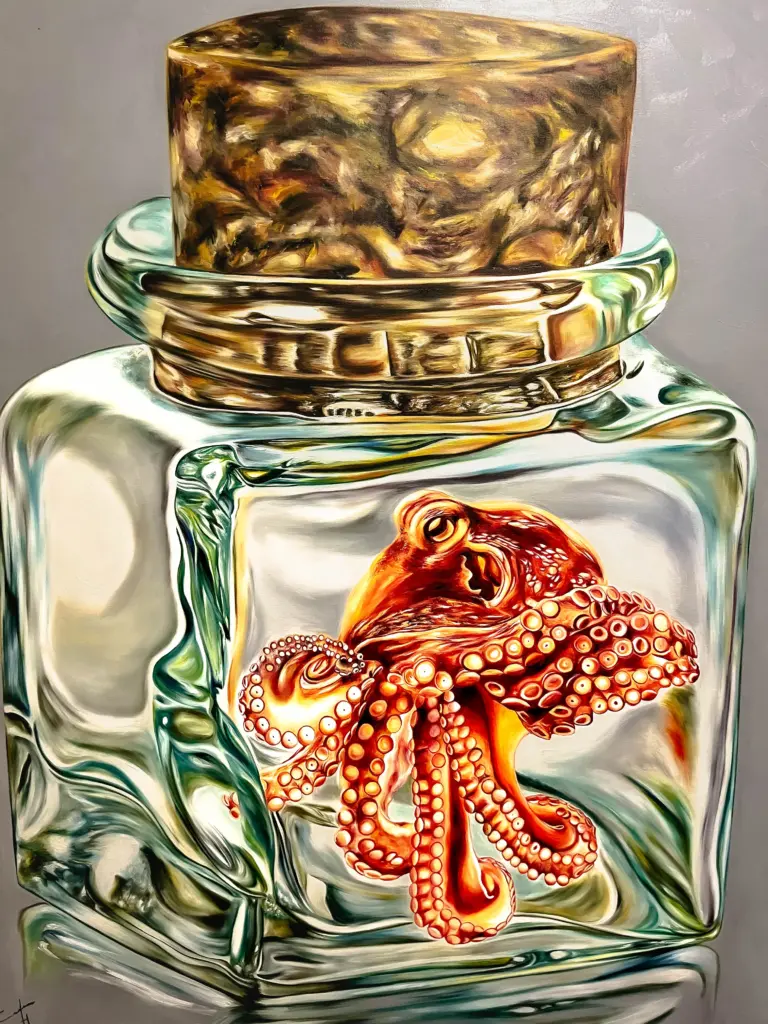
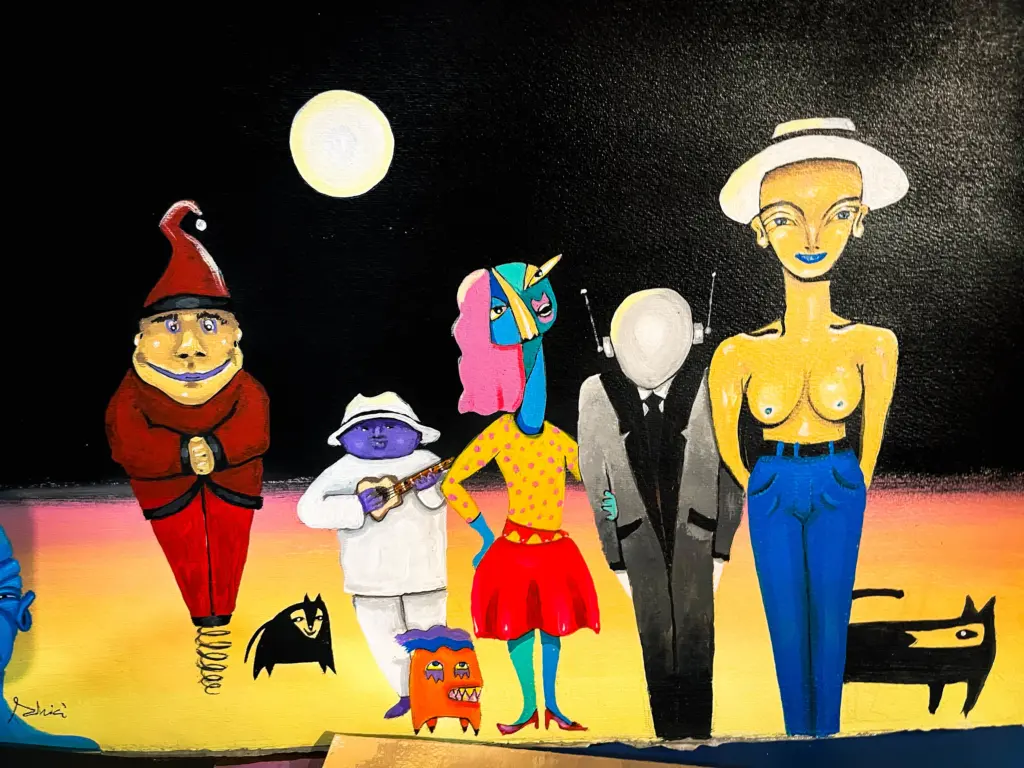
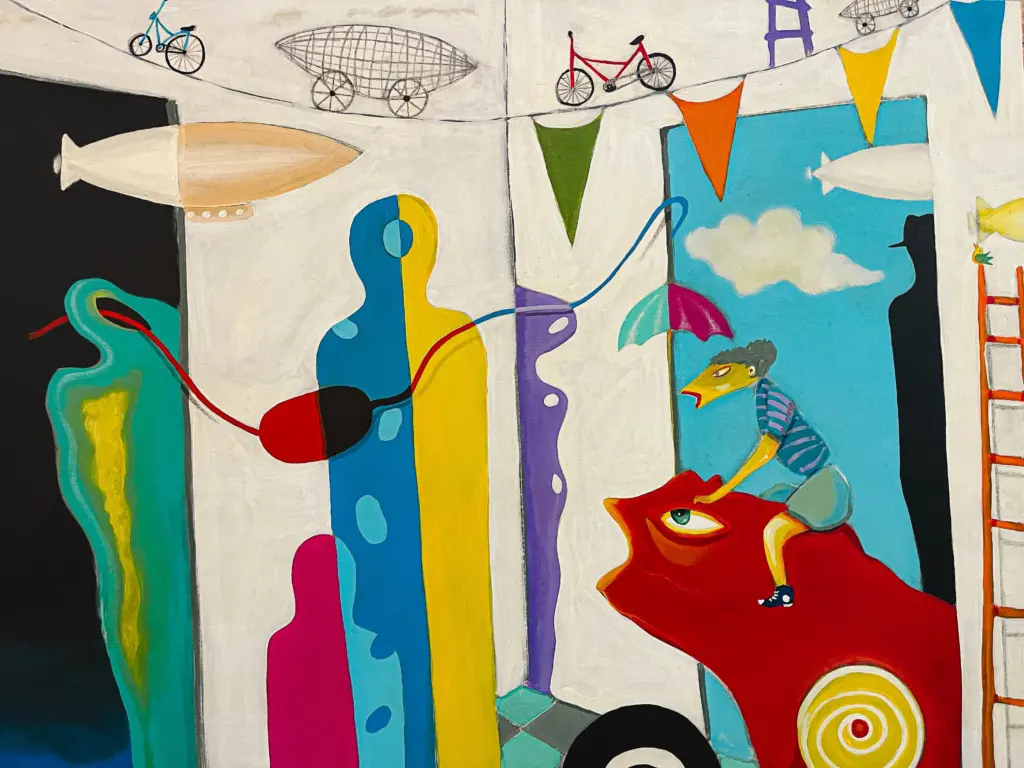
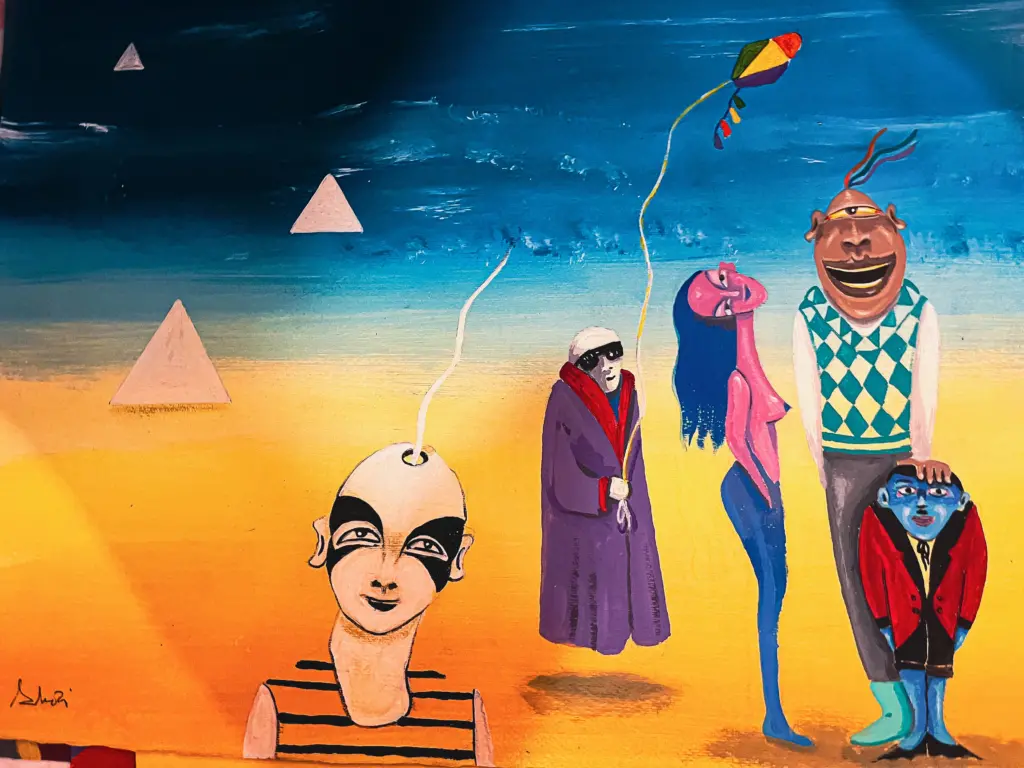
Puerto Vallarta’s greatest artists assemble for the 2024 Puerto Vallarta Art Walk


I just got back from a trip of a lifetime with some buddies in Puerto Vallarta, Mexico. Between the bottomless strawberry margs and the grueling hikes our hemp-wrapped lungs could barely handle, we spent a lot of time exploring the beautiful city. 


Puerto Vallarta is beautiful for a lot of reasons. Surrounded by mountains and the Pacific Ocean, you can’t help but feel you’re isolated in this natural compound, hidden from the irrational Kafkaesque irregularities we all face daily. It’s also home to some of the most unique architecture I’ve ever seen, with aesthetic traditions like haciendas taking precedence over the mundane architectural efficiencies I’m used to in Toronto. On top of this, the friendliest people I’ve ever encountered all seem to reside in this peaceful city. Going into the trip, my naive self was weary of the violence and corruption the mainstream media likes to pile onto Mexico. However, the reality couldn’t be further from the truth.


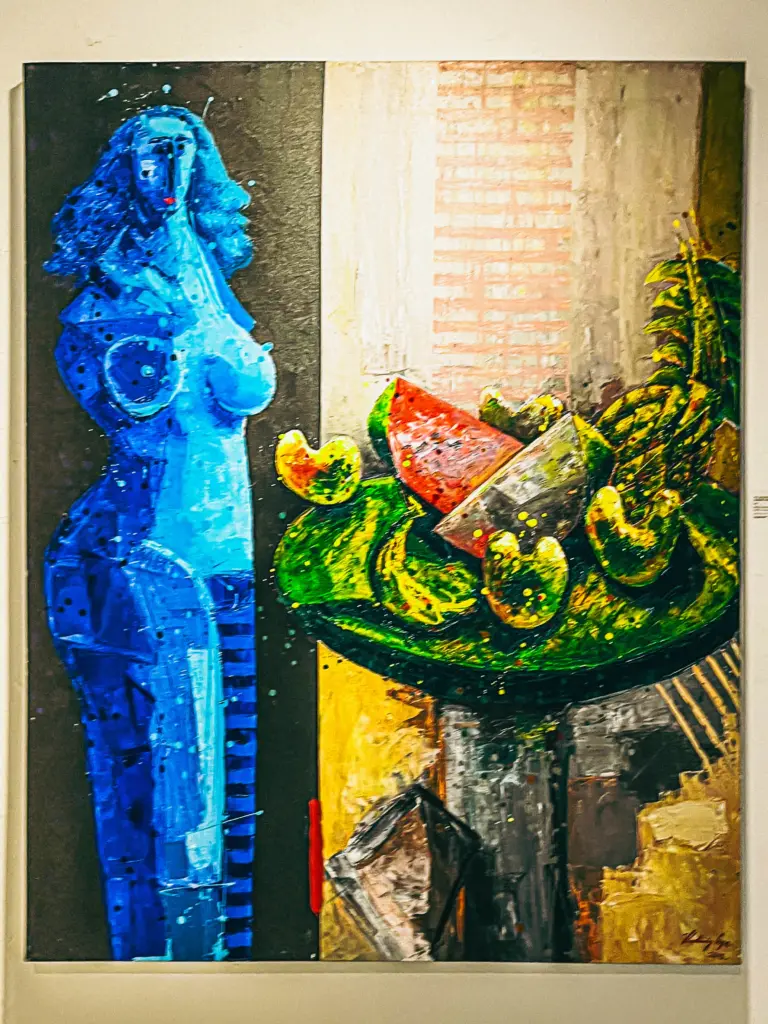
That all said, the most beautiful aspect of Puerto Vallarta to me was its famous art scene. As I’ve since learned, the Puerto Vallarta Art Walk is an internationally renowned festival where artists around the world display their work. The following are some of my favorite paintings and sculptures we saw on this year’s art walk. All photos were taken on my iPhone 12 and touched up in Lightroom. Gallery links can be found below.


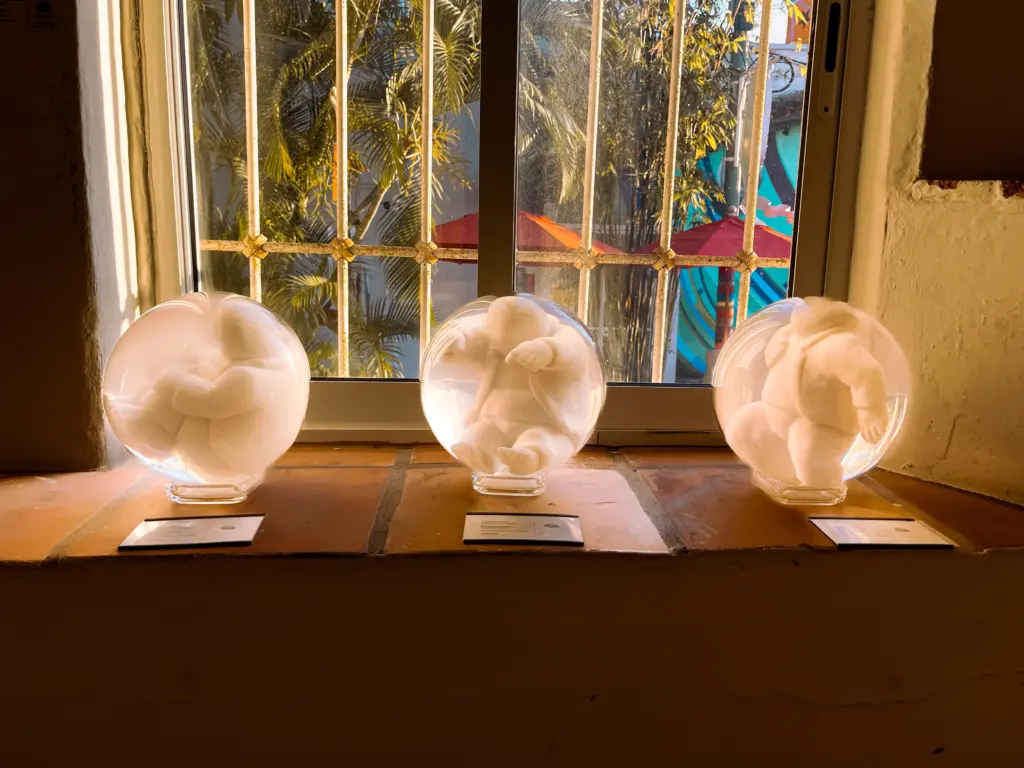
Figure 1, Gallery Colectika

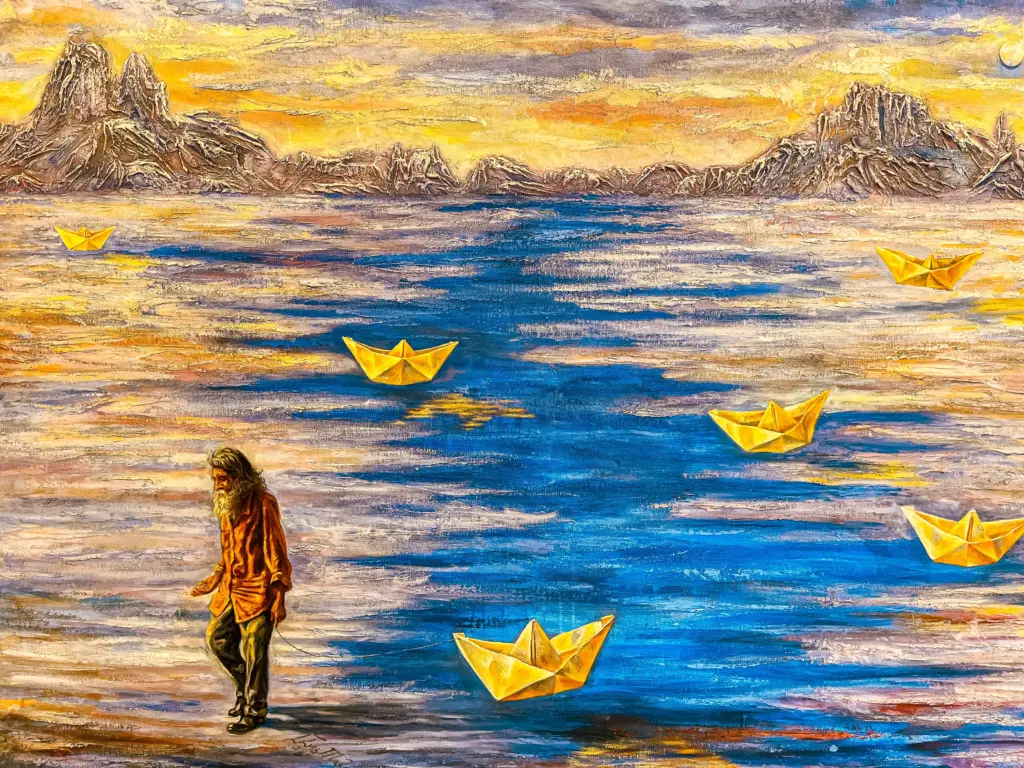
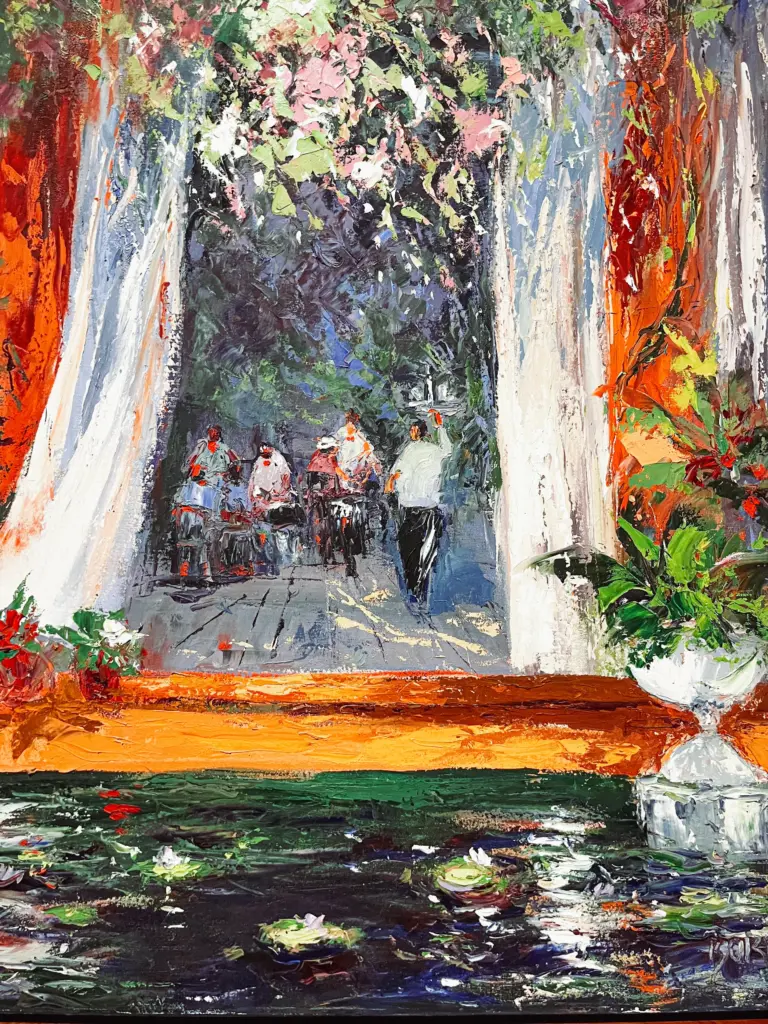
One thing that particularly sticks out to me in many of the paintings featured on this year’s walk is the absence of political and other didactic themes. Here, artists seem far more focused on their art’s technical aesthetic and expressive aspects than their commentary.


In Puerta Vallarta, art simply exists to exist. It doesn’t serve some secondary purpose that mobilizes its audience. It merely serves as a mirror, reflecting the serene beauty of their environment.


This is coming from a country laden with violence and corruption, at least as seen through the eyes of the media. Generally speaking, today’s most famous works of art are used to weaponize revolutions and to mobilize the masses. This idea came before WW2 with thinkers like Leon Trotsky, who famously stayed in Mexico with artists Andre Breton, Frida Kahlo, & Diego Rivera after his exile from Russia.


Trotsky debated with the prominent Mexican artists about the nature of art. Trotsky, beyond being an acclaimed military strategist, was also an extremely versed critic, who saw art as a tool for revolutions and as a means to freedom. Kahlo on the other hand, agreed with this assessment but thought that it was impossible to separate the aesthetic from the political, making any attempts prone to contradiction, and the freedom it aspires to achieve a paradoxical trap.


The influence Frida Kahlo has on the Mexican art scene is palpable. Beyond the fact that you can’t walk five blocks without seeing her face on a mural of some sort, you can witness the way she approached art in every Mexican painting today. It isn’t that these artists are “scared” to be political. Rather, they understand political presence is inevitable. Instead of fighting it like swimming against a current upstream, they swim within it and let it take whatever shape it wants.


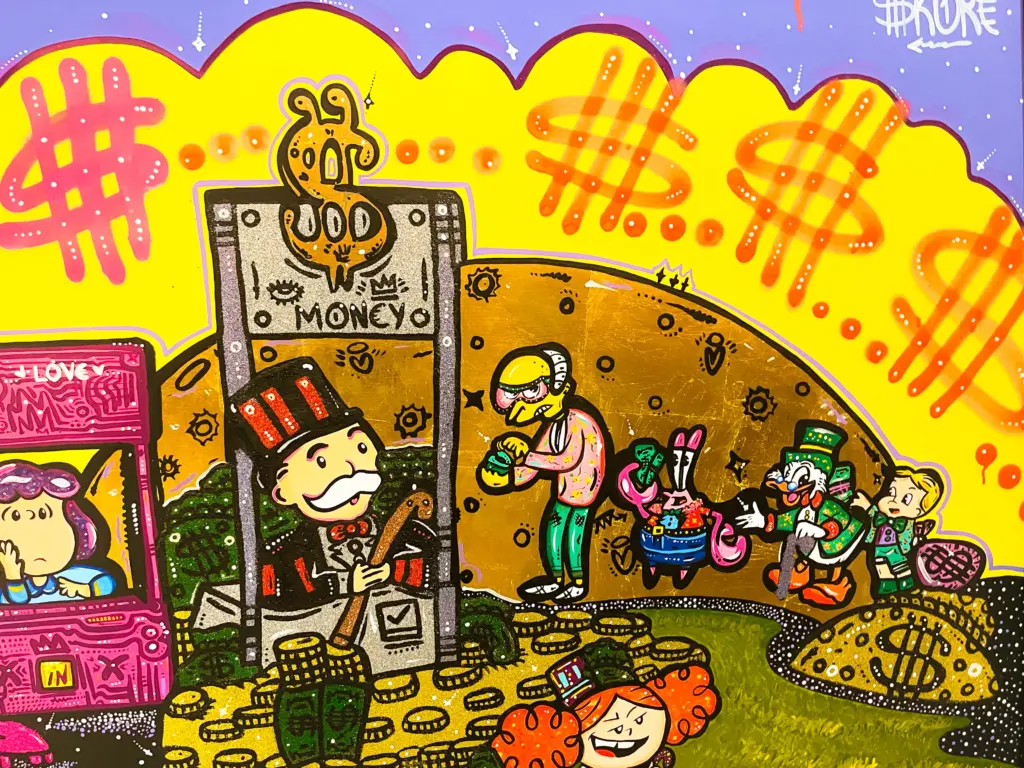
Figure 8 is one of the only overtly didactic pieces I noticed on this year’s walk. Besides, it isn’t making any political attack. It’s making the benign statement that money gets more attention than love. Hence, the line features Mr. Burns, Mr. Krab, Scrooge McDuck, etc. Something that seems very evident in Western culture today.


I believe the style of this painting in says more than its content. It’s created with traditional street art graffiti and samples of cartoon kitsch-like animations. However, it exudes elements of prestige, glitz, and glare as every element dazzles with diamonds. It’s as though the artist created a story combining the art of Andy Warhol and Damien Hirst.


Although it tells a somewhat disheartening story, the art itself is very comforting and peaceful to my Gen-Z brain. Taking the style and the content together, it’s a very relatable piece to practically anyone who grew up in the West. It also fits right in with the broader theme, that being the simple beauty of the Puerto Vallarta art scene.


Figure 11, Gallery Pacifico
Figure 12, Gallery Pacifico


Created by two different artists and curated by two distinct galleries, I can’t help but notice the sculptures in Figures 12 & 13 convey similar feelings. In a city renowned for its beauty and comradery, here are two artists expressing feelings of loneliness & isolation.


It’s easy for me to sit there with a strawberry marg in hand, having the time of my life with my best buddies in this foreign country, and ask “How could one ever express these types of feelings when living in such a beautiful place?”. But the logical part of my brain persists, and though I can’t relate in this very moment to the artists who spent weeks, months, if not years, compelling themselves to create something so vulnerable, I can through my association of ideas, recognize their pain in my own.


Though I can’t tap into the pain I’ve dealt with in my past, nor would I ever wish to go to that place again. I recognize it was once there, and may well have its place in my future. As any old philosophy book will tell you, understanding that pain is the first step to overcoming it. Recognizing this pain in the art of the most beautiful foreign country I’ve visited is, in an odd way, very reassuring because it comes with an understanding that pain transcends the individual, it is universal.


Figure 13, Gallery Uno
Figure 14, Gallery Pacifico

Saying Puerto Vallarta’s art scene neglects the didactic qualities of much of today’s contemporary art is a naive misunderstanding of their production. Following in the likes of Frida Kahlo, it’s now evident to me how they seamlessly blend such qualities with the aesthetic, expressive, and otherwise cathartic experiences art is intended for.

Trotsky was right in that it’s art’s duty to reflect today’s most poignant hypocrisies. However, Frida Kahlo showed us that both the most benign and the most malevolent pieces of art are victims to those same contradictions. The beautiful art in figures 15 and 16 for example do a great job representing, through paint and colour, my experiences in Puerta Vallarta. However, I doubt I’ll ever see the day mainstream media chooses to display such beauty when describing a place like Mexico.


The Mexican revolutionary spirit pioneered by the likes of Frida Kahlo hasn’t disappeared unlike some may think at first glance. It’s merely hidden in between the aesthetic and expressive primitive notions art relies on. It’s the relationship between these qualities that makes the art so beautiful.


References

Colectika

Corsica

Emotions by Corsica

Galeria Pajaro Rojo

Browne Galeria

Galeria Uno

Galeria Pacifico

The Loft Galeria

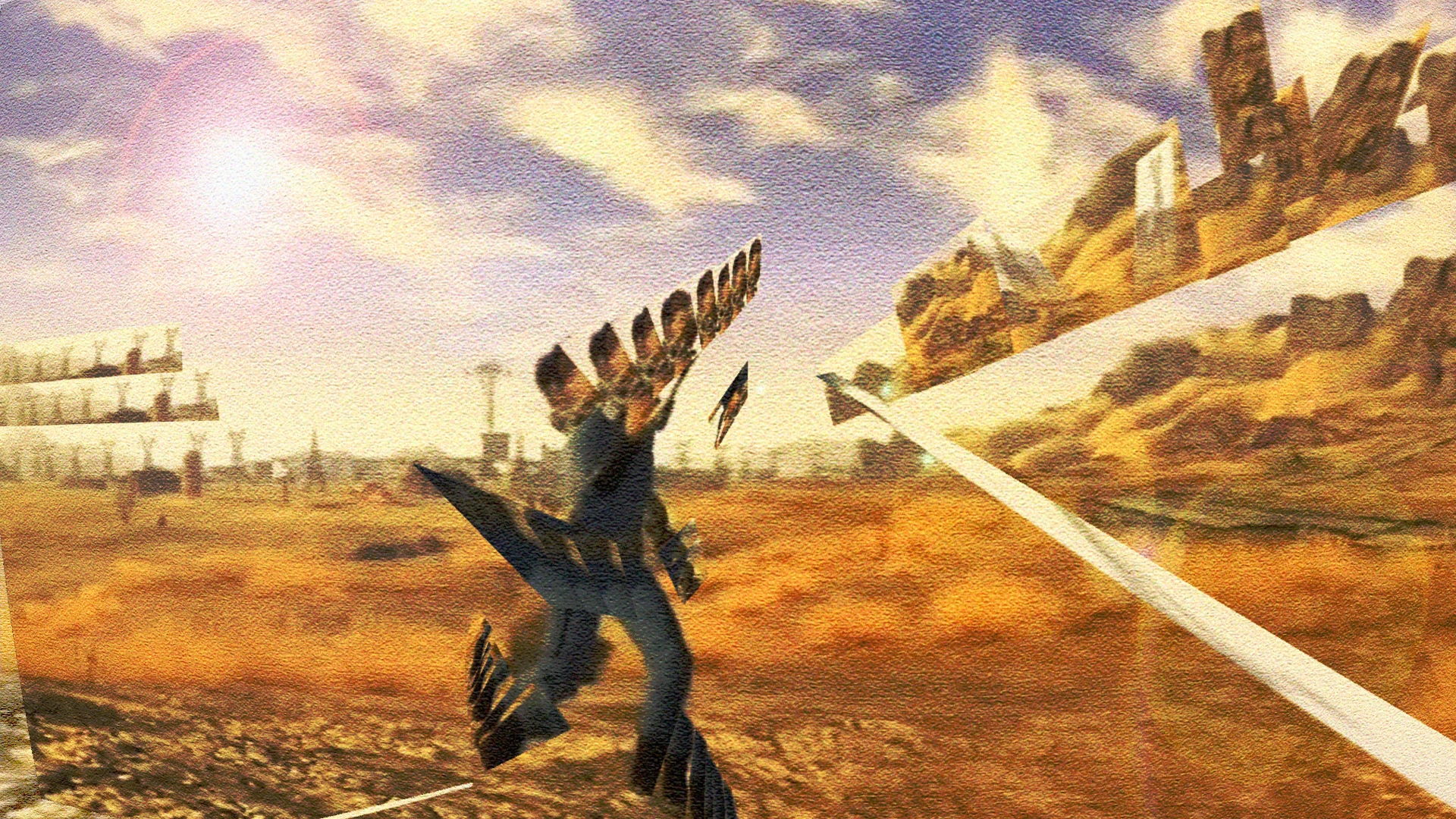
The Courier’s Glitches Through the Mojave Wasteland

Glitch Art Inspired by Fallout New Vegas


To blow off steam during exam season I’ve started playing Fallout New Vegas in honor of the popular TV show airing today. Traveling the Mojave Wasteland I’ve been inspired in the most unexpected ways.


The aesthetics and its absurdities are a staple and in this case a muse. However, the occasional glitches natural in the fifteen-year-old game have been my largest inspiration.


The glitches in the video game speak to the frustrations we have in our system. The benign battles we face on a day-to-day basis. When your bus is twenty minutes late or when you follow the wrong directions, you are faced with a glitch in the system. You can order an Uber or search new directions to bypass the glitch. However, like downloading a mod to fix a bug, the glitch doesn’t truly go away, it just gets buried beneath the new code.


Modding over a glitch removes the problem from the domain of the senses but it remains there intellectually. Just because we can’t immediately feel its repercussions doesn’t mean we can ignore its existence. Calling an Uber immediately fixes the bus situation, but we know we have to account for twenty-minute delays in the future.


Besides, no matter how fast we adapt, the more we live life the more prone we are to future glitches. From this perspective, glitches are like wounds and the mods we deploy to fix them are our battle scars.


Though there are only so many ways to get a “battle scar”, each scar is inherently unique. Such a uniqueness is celebrated in popular culture.  We see war veterans celebrated in the media for their battle scars. We also see fictional characters like Harry Potter and the Joker both revered and despised for such features. 


Repurposing these glitches in Fallout New Vegas illustrates similar feelings. The frustration involved in stumbling across a glitch and having to comb through paragraphs of tutorials to find the solution reminds me of the times my bus was twenty minutes late and I had to call an Uber to avoid being late for work. At the same time, the absurd aesthetics of these glitches are a unique feature that can be celebrated with the proper perspective. When I’m in the Uber instead of the bus, I see architecture in neighborhoods I’m less familiar with. There’s a sense of beauty in the new. 


Like a battle scar, an artist couldn’t recreate these glitches if they tried. They’re the result of a hitch in the system, a system far more complex than any one mind can understand.  When the bus is twenty minutes late we can claim to know its cause, I.E. construction. However, that cause only calls into question further causes until we’re left with an inadequate explanation. 


Instead of frustrating oneself by searching for the root cause of these glitches, it’s possible to recognize their existence as serene. They are natural phenomena amidst the artificial landscape of the hyperreal, a terrific consequence of the system.

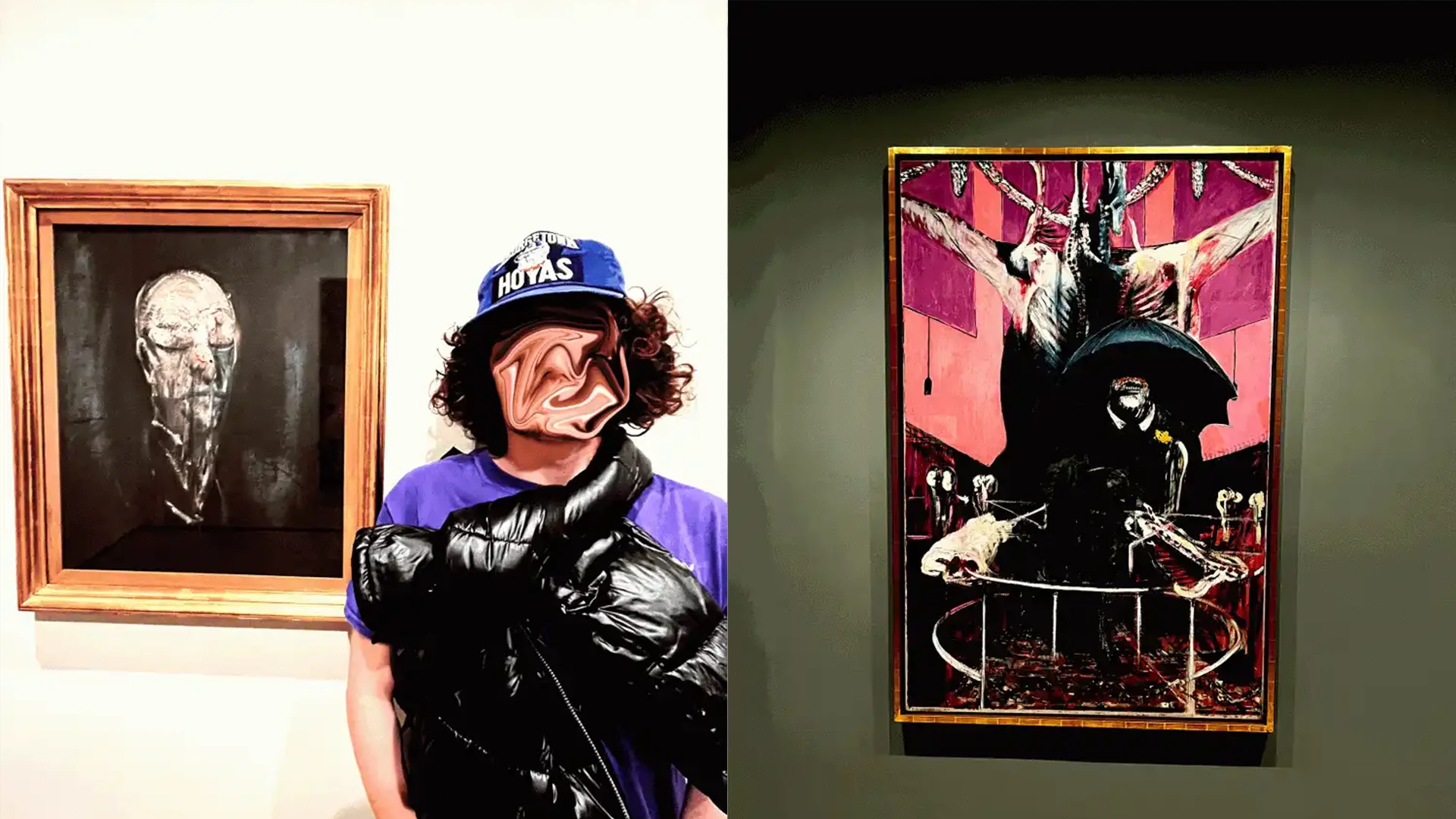
My Transition into a Cyborg


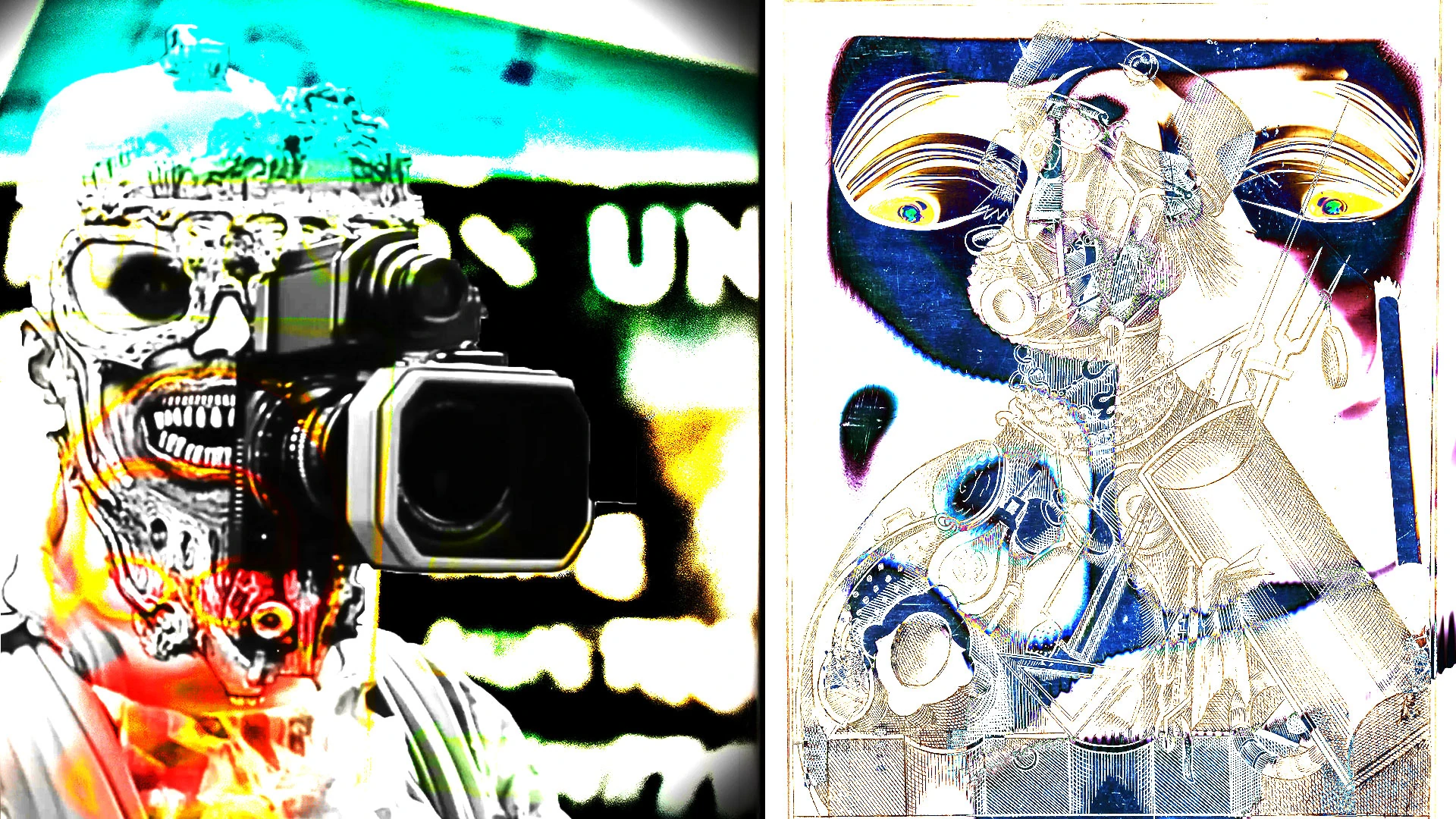
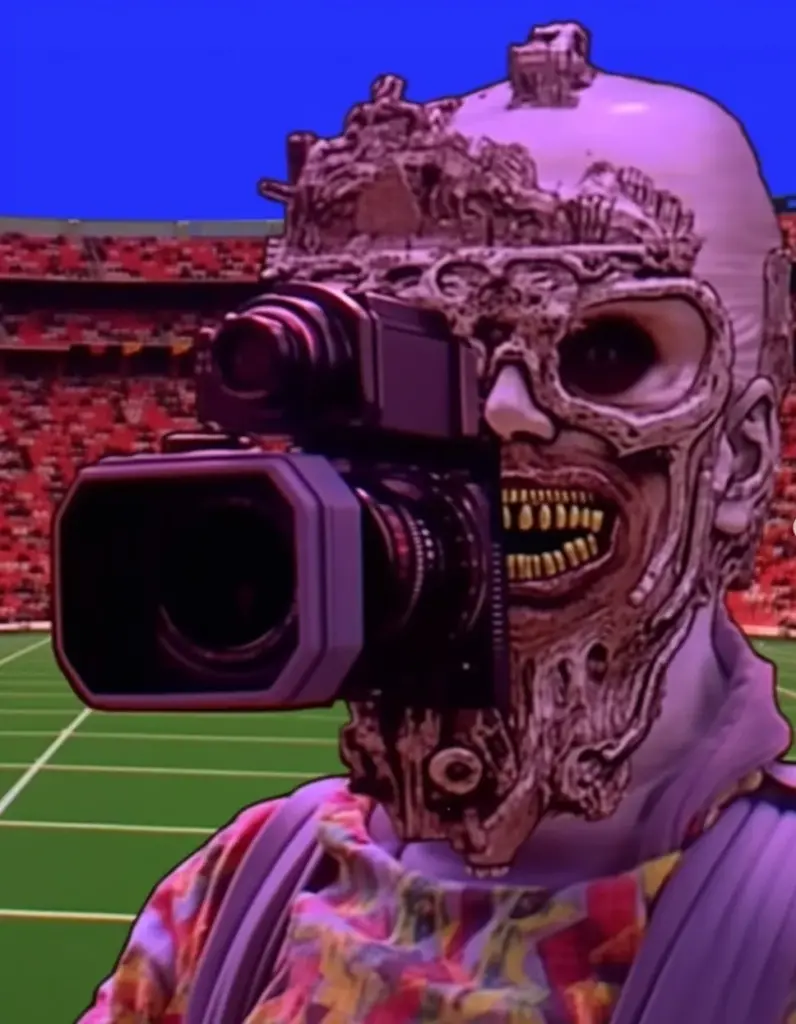
Face Reveal by Jaustin (2024)


Is Art Dead?


Being an artist in 2024 sometimes feels like working as a cashier for Blockbuster in the late 2000s. Although our jobs and livelihoods are being threatened by some intangible technological insurrection, we have no choice but to keep our heads down and push forward.


Artists tend to fall into one of two camps regarding the AI-art revolution. Some fear its inevitable fate, while others embrace it with open arms.


As evidenced by Face Reveal (The piece of art above), I tend to lean towards the latter camp. But I wouldn’t be honest with myself, nor an artist for that matter if I didn’t take all of my emotions into account. The fact that a computer can produce my vision in 10 seconds compared to the days, weeks, or months it takes me to sketch out my ideas is a bit disconcerting. The logical response to that is to simply use AI to produce my visions far more efficiently. But every artist knows there’s a sense of pride that accompanies the craftsmanship of each creation.


However, that assumes there’s no sense of craftsmanship in AI art. It took a level of skill on my part to maneuver AI in such a way to create Face Reveal. Moreover, I know my audience can’t recreate Face Reveal, which gives me the similar feeling of fulfillment I get as an artist creating something with my traditional skillset. If AI art produces the same quality of craftsmanship seen in traditional art, what distinguishes the two? If nothing fundamentally distinguishes AI art from traditional art is there even a point in either loving or loathing art’s impending paradigm shift? It’s these types of debates that take for granted this terrific time we as creators are currently living in, and ultimately what it means to be human.


Reading 

Do Not Research ‘s article The Origin of CyborgsKit Katay’s take on Donna Haraway’s 1985 essay: A Cyborg Manifesto, I was reminded of Haraway’s prescience. Haraway showed us we wouldn’t be humans if it weren’t for technology, and that it is through tech we’ll evolve beyond what it means to be ourselves. 35 odd years later our transcendence into “cyborgs” has taken a giant leap forward with the AI revolution. This AI art vs. Human art debate is futile. Instead, AI art will be viewed as an extension of our senses like any other technology. This metamorphosis of AI and Human art taking over the hyperreal is a demonstration of Haraway’s theory in action, a continuous globalized and mechanized piece of performance art, and a part of our inevitable transition into cyborgs.


Our Cyborg Transition


A Cyborg Manifesto Alternate Cover (1985)


In Donna Haraway’s 1985 provocative essay A Cyborg Manifesto, she explores the inexorable mutation between humans and machines. Her essay concludes that this fusion is inevitable, merely a biological step in our evolutionary process. But through this transition into cyborgs, there is hope to emancipate the culture.


The term “cyborg” is a metaphor for this evolution. It represents the idea that traditional categories like human vs. machine, or tangible vs. intangible no longer provide useful context for understanding the complexities of existence. Cyborgs aren’t weighed down by traditional social norms, are not divided by race or religion, nor are they prone to prejudice. Instead, they are free from rigid identities (Haraway, 1985).


Our transition into cyborgs began when we took control of our environment. Historically, humans bent to nature’s whim. We didn’t develop fire or learn to communicate until nature dictated it was time to sacrifice our physical strength for greater mental capacity (Katay, 2024). We didn’t evolve into homo sapiens until nature presented us with the opportunity. Today though, we are now the masters of our environment. We are using technology like CRISPR-Cas9 to reprogram the code in our genes, developing sustainable synthetic biological organisms. Destroying natural ecosystems in the name of profit, building artificial ones like the internet to satisfy our rates of consumption. No longer do we abide by environmental constraints like space and time, the only thing holding us back is ourselves.


When we are the masters of our environment and its pressures, and wield the resources and power to change them, we choose what we become. A generation of social-technological interference could alter human genetics forever”(Katay, 2024).


35 years later, is this cyborg epoch Donna Haraway predicted as much of a techno-utopia as she hoped it’d be? Thanks to technology, more fluid social dynamics have flourished and hit the mainstream like feminism for example. There’s an increased focus on progressive policies in Western society. Overall, our quality of life has increased dramatically across the world.


But at what cost? The necessity of technology has paved the way for a reliance on such tools. The cyborg generation born at the crest of the information age knows no life without the internet. The internet is just as much a part of Gen-Z’s central nervous system as any other motor function. Being an extension of our senses, the internet morphs into the psyche like two atoms colliding, and the result is a loss of self. In an act to keep up with the current tech, take part in trends, and stay connected, we chip away at our identity and replace it with the melting pot that is the internet. Haraway was right in that the cyborg evolution would replace such rigid identities, however, replacing the self with the cyborg is conforming by nature.


The Cyborg Artist


Untitled by RonjaFman (2024)


Have you ever considered how we are in a ”loneliness epidemic” despite being in the most connected time in history? When you consider the implications of this reliance on technology the answers seem pretty obvious. Sacrificing one’s identity can have disastrous consequences psychologically. The constant pressure to conform leading to the loss of identity means we aren’t communicating substance, merely spewing the same string of propositions with slightly different sentence structures. No wonder society feels so lonely when everyone’s on the internet reposting the same talking points and repeating the same trends, slowly pushing culture forward a millimeter at a time. Instead of being the culture mover social media was once advertised as, every day it gets closer to realizing its potential as one gigantic mirror for society to gawk at, which is a poetic metaphor for the birthplace of the selfie.


The rampant, unfiltered technological revolution has ushered society into a new epoch and the results are unpredictable. Who would have thought the result of instantaneous communication is a loneliness epidemic?  What it means to be a human has an entirely different meaning compared to 1000, 100, or even 10 years ago. Therefore these masochistic news cycles perpetuating seemingly benign debates like human art vs AI art are meaningless. We aren’t humans, we are cyborgs. And art is merely just a fragment of this paradigm shift. Just like any other industry, sheer efficiency and the impulse for profits will take precedence over any sentimentality. The reality is artists have no choice but to adapt. This may be daunting, but just as Donna Haraway predicted, more than anything it will be liberating.


To understand the role of the cyborg artist in the information age we have to recontextualize what art means today. Historically, art’s foundation was in religion (Benjamin, 1969). The bigger the impact a work of art had on its theology,  the more valuable society deemed it. However, this took a drastic shift amidst the Industrial Revolution as art’s value was shaped in a different context. Instead of being based on a religious “cult” value”, the newfound ability to mechanically reproduce art meant we could disperse it globally, and as a result, the messages embedded within a work of art would spread like wildfire. Essentially, while the Industrial Revolution emancipated art’s reliance on religion, it replaced it with another artificial value, a political one. All of the most famous works of art within the Industrial Revolution have some sort of political ideology, whether intentional or not; Think of Picasso’s Guernica, Warhaol’s Campbell’s Soup, or Bacon’s Pope.


So, if the Industrial Revolution led to the politicizing of art, what does that mean for this impending technological revolution? On one hand, more tech = more politics. The faster we can communicate ideologies, the faster the public will gobble them up and rehash them during their work breaks and dinners. However, intuition tells me a tipping point is inevitable. Where has this idealistic political hot potato gotten aesthetics? Not very far if we’re being honest. Political-based art has led to a qualitative shift in movements like Haraway’s feminism, but quantitative issues facing society have remained, such as poverty, police brutality, and now the loneliness epidemic! In the long run, relying on AI to improve art’s political impact seems blissfully ignorant. A far more likely conclusion seems to me that this inevitable fusion of AI art and political-based aesthetics will produce ideologies far faster than humans can comprehend, and as a result will lose our appetites. The political value of art will wither away and something anew will take it’s place.


If we’re not careful, this new value propping up the aura of a work of art in the age of the AI revolution could be as simple as capital. It may sound ridiculous to deem a work of art more impactful than the next because of the money it netted. However, the media can’t help but compare box office budgets, auction prices, album sales, drilling these numbers into our brain as if it’s the art’s essence. Whether art’s newfound value hinges on capital, on followers, or on onlyfans subscribers, regardless, art is not dead, it has merely evolved. Through trial and error, my fellow cyborg artists and I will not only search for the meaning of this emergence; it’s true value, but be a driving force behind it, dancing between the mechanisms of today’s revolutionary technological advancements, and today’s most passionate human stories. If that’s not liberating, I don’t know what is.


“We must expect great innovations to transform the entire technique of the arts, thereby affecting artistic invention itself and perhaps even bringing about an amazing change in our very notion of art” – Paul Valery


References


Adorno, Theodor W., and J. M. Bernstein. “Transparencies on film.” The Culture Industry, 2020, pp. 178–186, https://doi.org/10.4324/9781003071297-8.

Benjamin, Walter. (1969). The Work of Art in the Age of Mechanical Reproduction.. In Arendt, Hannah (Eds.), Illuminations: Essays and Reflections (pp. 217-251). Schocken Books

Couto, Sarah Do. “Loneliness Is Now a ‘Global Public Health Concern,’ Says Who – National.” Global News, Global News, 16 Nov. 2023, globalnews.ca/news/10095898/loneliness-global-public-health-concern-who/#:~:text=The%20World%20Health%20Organization%20%28WHO%29%20has%20warned%20that,public%20health%20concern%E2%80%9D%20of%20loneliness%20and%20social%20isolation.

Haraway, Donna J. “A cyborg manifesto.” The Socialist Review, 1 Apr. 1985, pp. 3–90, https://doi.org/10.5749/minnesota/9780816650477.003.0001.

Katay, Kit. Kat Kitay: The Origin of Cyborgs, Do Not Research, 11 Dec. 2023, substack.com/home/post/p-122585960.

Plato. The Project Gutenberg eBook of the Republic, by Plato, Project Gutenberg, www.gutenberg.org/files/1497/1497-h/1497-h.htm. Accessed 7 Dec. 2023.

Wachowski, Lilly, et al. The Matrix.

Other links

Francis Bacon’s paintings

Benny Safdie & Nathan Fielder: The Curse

Reddit: Place 2023

Untitled by Ronjafman, 2024

CRISPR-Cas9

Built by Silkworms | Neri Oxman’s “Silk Pavilion II”

Quality of Life Index

Starry Night(s): “The Work of Art in the Age of Mechanical Reproduction.”

How the mechanical reproduction of art led to World War II


We must expect great innovations to transform the entire technique of the arts, thereby affecting artistic invention itself and perhaps even bringing about an amazing change in our very notion of art. – Paul Valery

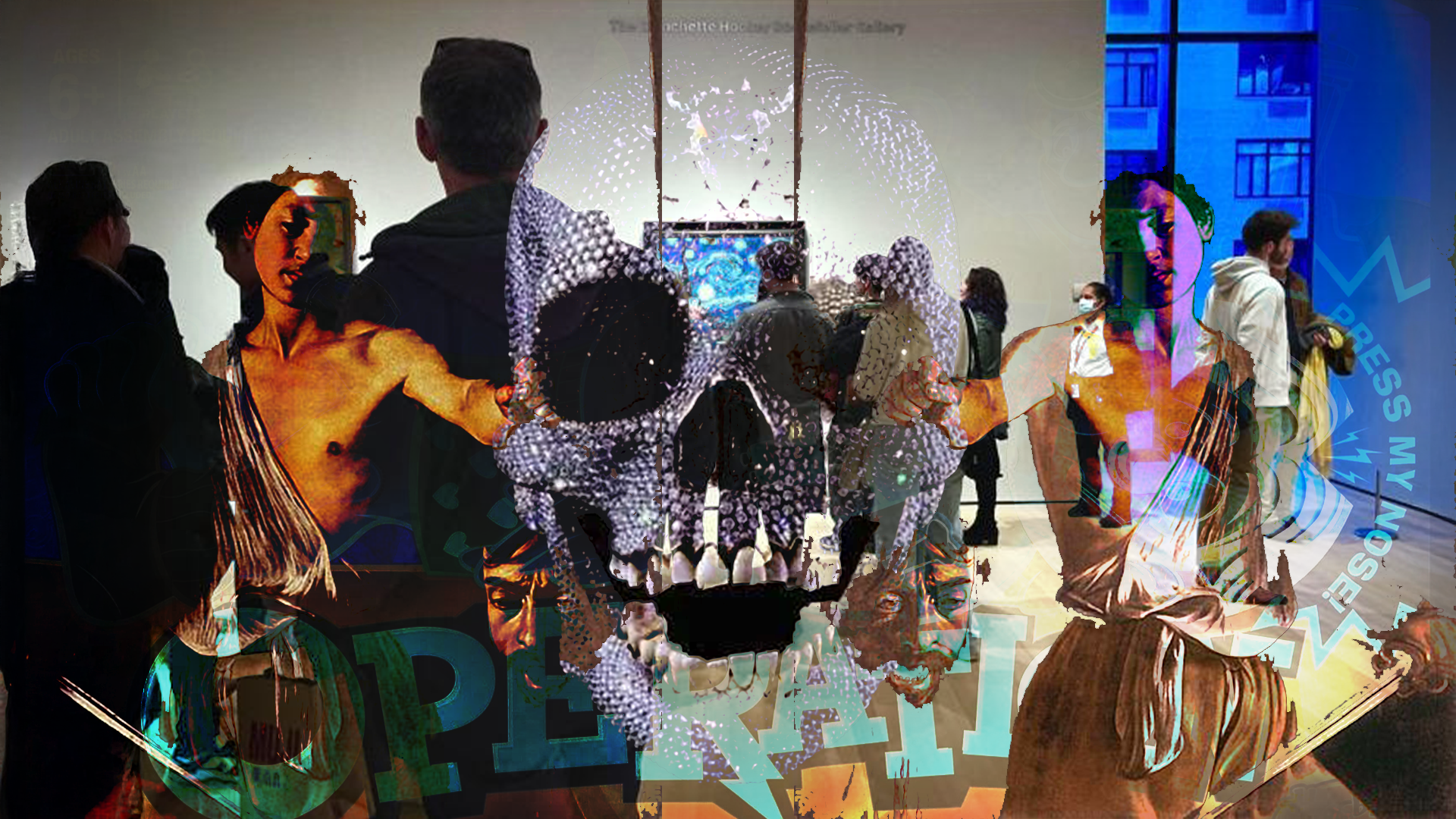
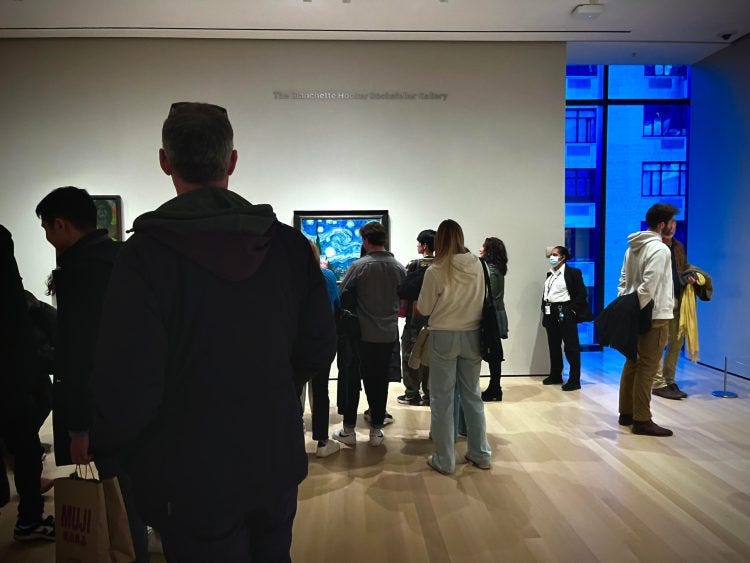
Vincent Van Gogh’s “Starry Nights” at the MoMa (2023) photo by me

From Cult Value to Exhibition Value


I took the photo above at the MoMa because it’s a perfect analogy for Walter Benjamin’s essay The Work of Art in the Age of Mechanical Reproduction. Benjamins’ work is interested in how art changed amidst the Industrial Revolution, specifically in art’s transition from its perceived “cult value” to its newfound “exhibition value”. What gave a piece of art its “cult” status was its aura and magic. Previously, if one wanted to experience Van Gogh’s Starry Night they must be in a unique time and place. Today, all one has to do is look it up online and order a reprint. Any semblance of cult value in a work of art has diminished drastically. As evident in the photo above, the audience is more interested in reproducing the piece of art as a photo than experiencing it as a unique phenomenon of history.


That’s not to say the cult value of art should take precedence over its exhibition value. In fact, the mechanical reproduction of art liberated it because by having its value in the cult, it was dependent on ritual. Historically, a work of art was only as valuable as society deemed it. Today, one can value a work of art for any reason they see fit.


However, art’s inevitable liberation brought on unforeseen repercussions in how it’s consumed. Exhibition value first displaced cult value with the invention of photography. Photographs are not just works of art but are historical testimonies that hold political significance. The added political weight to a work of art makes it harder for the audience to differentiate between criticism and enjoyment because it builds an intimate and sympathetic, or in Benjamin’s words, a progressive reaction. The ritual-based relationship cult-valued art used to have has merely been replaced by a political-based relationship with exhibition-value art.


The Progressive Reaction of Exhibition-based Art


Mechanical reproduction of art changes the reaction of the masses towards art… The reactionary attitude toward a Picasso painting changes into the progressive reaction toward a Chaplin movie.

– Walter Benjamin (The Work of Art in the Age of Mechanical Reproduction, pg.235)


Progressive reactions mean “the conventional is uncritically enjoyed, and the truly new is criticized with aversion” (pg.236). This is because an individual’s perception of art is influenced by the mass audience’s reaction. For example, the public loves the Avengers movies because they know what to expect but critiques Ari Asters Beau is Afraid because it caught them off guard. Moreover, quantity has surpassed quality. The Avengers is a more important film because it has sold x-more tickets.


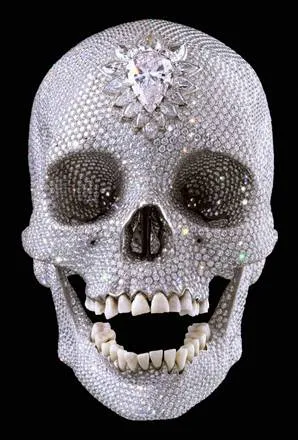
Reproducing art to such an extent has made us accustomed to its presence. Historically, seeing a painting of a skull would permit all sorts of emotions, dread, fear, and paranoia of a bad omen. Today, we see skulls on clothes, in ads, in emojis, likely multiple times a day. So much art no longer produces a reactionary sense of concentration, but only a progressive sense of distraction.


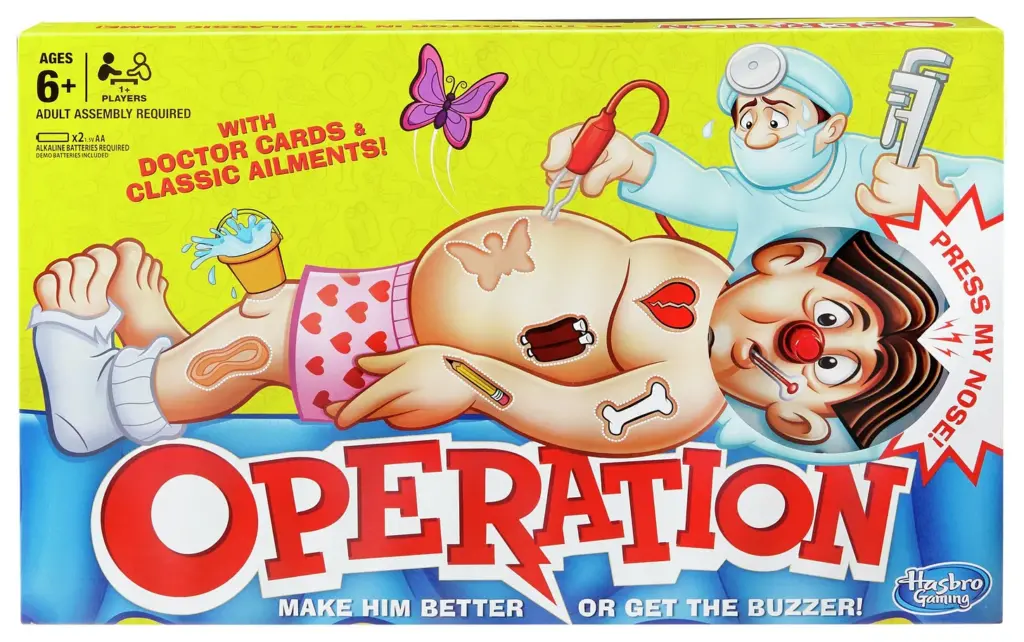
The mass reproduction of art has raised the audience’s tolerance to it like a drug addict chasing their next high. Not only that, it’s also dulled our senses, making us vulnerable to ideologies infringing on aesthetics. Today ideology and aesthetics are inseparable. An art-house film of purely abstract images will still provoke ideology, even if that ideology is a rejection of all others. This is dangerous because the audience is led to believe this is of their own volition, however, as Theodor Adorno first argued, our reactions are merely mimetic impulses orchestrated by the powers that be, like a game of operation.


The consumers are made to remain what they are: consumers. That is why the culture industry is not the art of the consumer but rather the projection of the will of those in control onto their victims. The automatic self-reproduction of the status quo in its established forms is itself an expression of domination.

– Theodor Adorno (Transparencies on Film, pg.185)


What happens when the powers that be don’t have the consumer’s best interests at heart? History has shown us what happens when perverse ideologies are integrated into mass-produced aesthetics.


The Mechanical Reproduction of Fascism


In principle, a work of art has always been reproducible. However, the mass scale of mechanically reproduced aesthetics brought on by the Industrial Revolution and the invention of photography around the 1900s is something else entirely. For the first time, art is no longer limited by time and space, meaning ideologies can spread like wildfire. Combine that with the mindless progressive reactions produced by consuming art, it is easy to see how manipulative ideologies underlying aesthetics can be.


Fascist poet and founder of the Futurist art movement Filippo Marinetti is one of the first to discover how the mechanical reproduction of art led to its politicizing. His futurist movement weaponized aesthetics as a means to manipulate the masses. Facists discovered the progressive reactions of mass-produced art can create an inorganic catharsis. The futurist art movement took advantage of this, using art to argue the necessity of war and violence for people to express themselves. This is what provoked thousands of individuals to join various fascist political parties across Europe.


“A man who concentrates before a work of art is absorbed by it. In contrast, the distracted mass absorbs the work of art”. 

– Walter Benjamin (pg. 240)


Ironically, the fascist’s strategy to weaponize aesthetics comes straight out of Marx’s idea of “history being a class struggle,”. This all but proves the inevitability of this aesthetic evolution. How the Industrial Revolution emancipated art is undeniable. No longer is art limited to time, space, or its cult values. However, this liberation also opened up the floodgates for a progressive reaction, and a resulting political-based relationship took its place. Until art transcends this relationship, ideologies will continue to plague aesthetics. Yet being aware of this formula is the first step to rising above it.


References


Adorno, Theodor W., and J. M. Bernstein. “Transparencies on film.” The Culture Industry, 2020, pp. 178–186, https://doi.org/10.4324/9781003071297-8. 

Benjamin, Walter. (1969). The Work of Art in the Age of Mechanical Reproduction.. In Arendt, Hannah (Eds.), Illuminations: Essays and Reflections (pp. 217-251). Schocken Books

Bergman, Ingmar. Films Incorporated. (1957). The Seventh seal. Chicago.

Bowler, A. Politics as art. Theor Soc 20, 763–794 (1991). https://doi-org.ezproxy.lib.torontomu.ca/10.1007/BF00678096

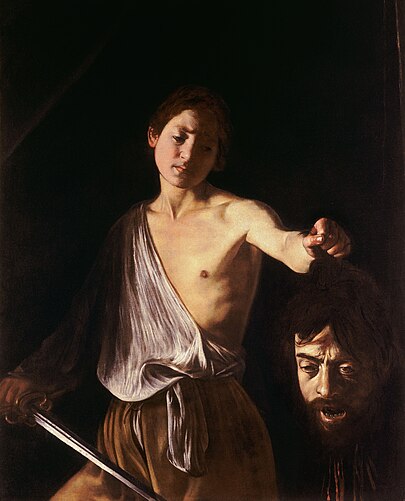
Caravaggio, David with the Head of Goliath (1609)

Hirst, Damien. For the Love of God (2007)

Marx, Karl, and Friedrich Engels. The Communist Manifesto. Monthly Review Press, (1998) (republication) (original publication 1846).

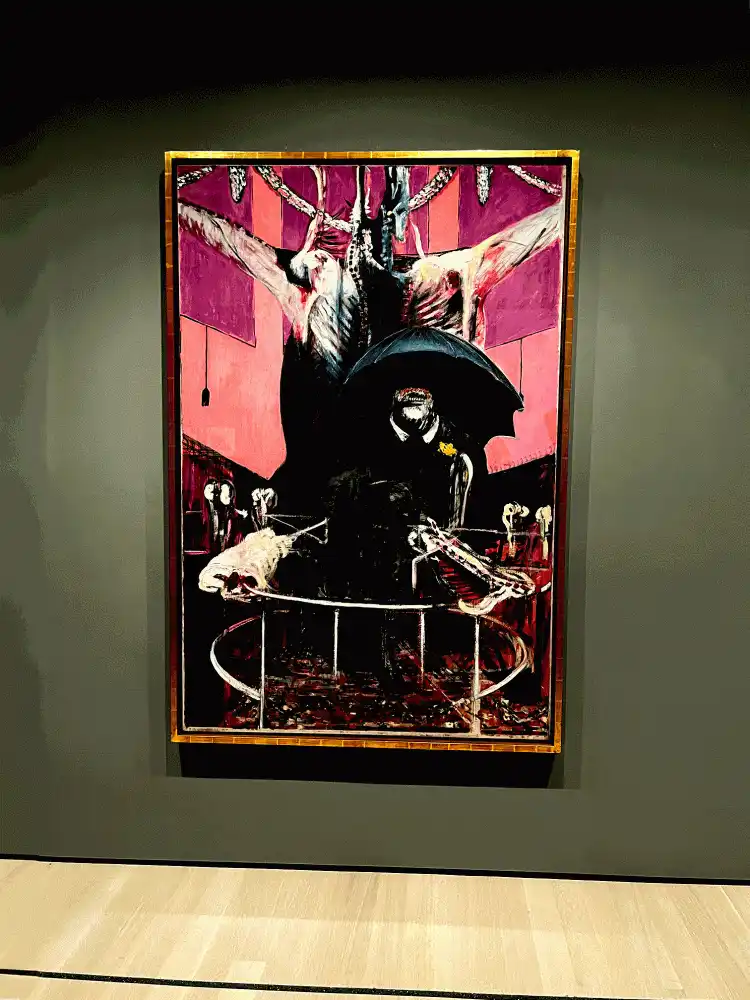
Francis Bacon’s “Painting (1946)”

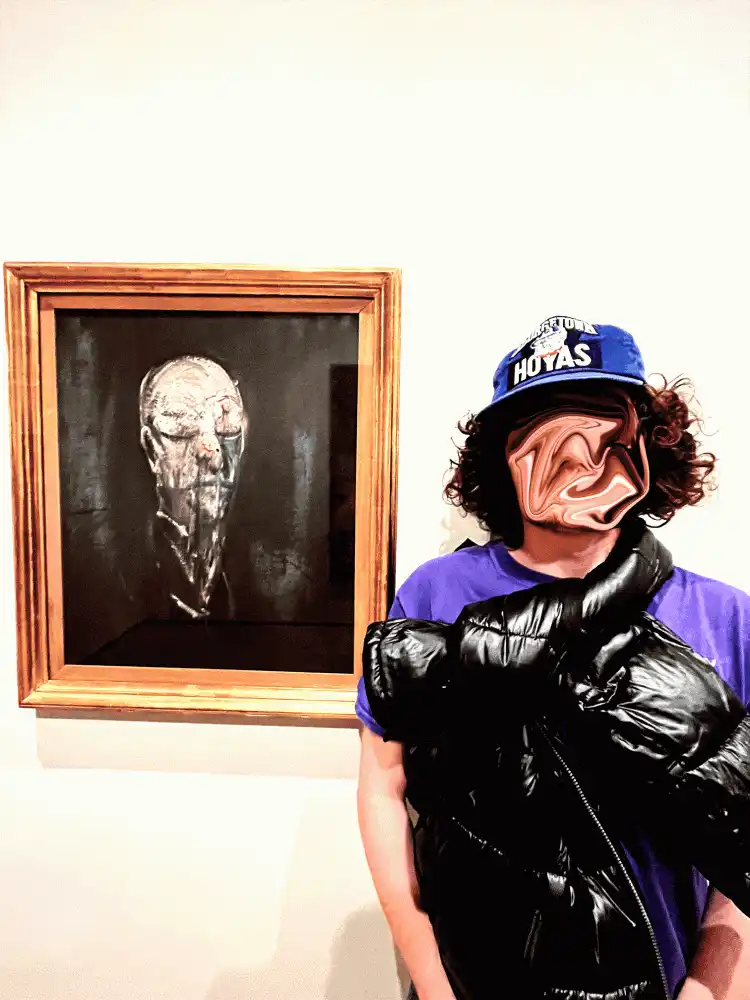
I finally got to see my favorite painting ever, Francis Bacon’s “Painting 1946” at the MoMa.


Earlier in the year I saw some works of the renowned artist & personal inspiration, Francis Bacon, at the MoMa. But to say I merely saw them is an understatement. 31 years after his death, Bacon’s paintings sent me on a surrealist trip only the likes of Hunter S. Thompson could aptly describe. There is something in Bacon’s haunting and violent brushstrokes that confronts human nature at its core. Bacon’s paintings presuppose the idea that art should provoke complex and intense emotional responses buried in the psyche, oftentimes coinciding with the darker aspects of the human equation.


“Painting (1946)” famously captures Bacon’s aesthetic, depicting a terrifying scene where an anonymous individual oversees the butchery of meat that looks vaguely human. Though Bacon denies this, as he denies imprinting any such narratives onto his art, many people believe the half-faced individual is former UK prime minister Nevile Chamberlain, who took office directly after Churchill amid WW2. Chamberlain is infamous for his “Appeasement policy”, which gave Nazi Germany certain parts of Eastern Europe in return for the UK’s freedom. Whether or not the figure is Chamberlain the conversation remains. This painting confronts life post-WW2 by mirroring the trauma and existential dread festering Europe at the time. The cage-like structure surrounding the individual, the microphones off to either side of him, and the umbrella masking his face, evoke anxiety trademarked by the time. 


Painting (1946) is a testament to Francis Bacon’s ability to convey profound emotions and present human nature like none other. His visceral paintings transcend the art form itself by assaulting the audience with the truth of their existence. In doing so, Bacon pushes the boundaries of what it means to express oneself, leaving an imperishable impression on the art world.

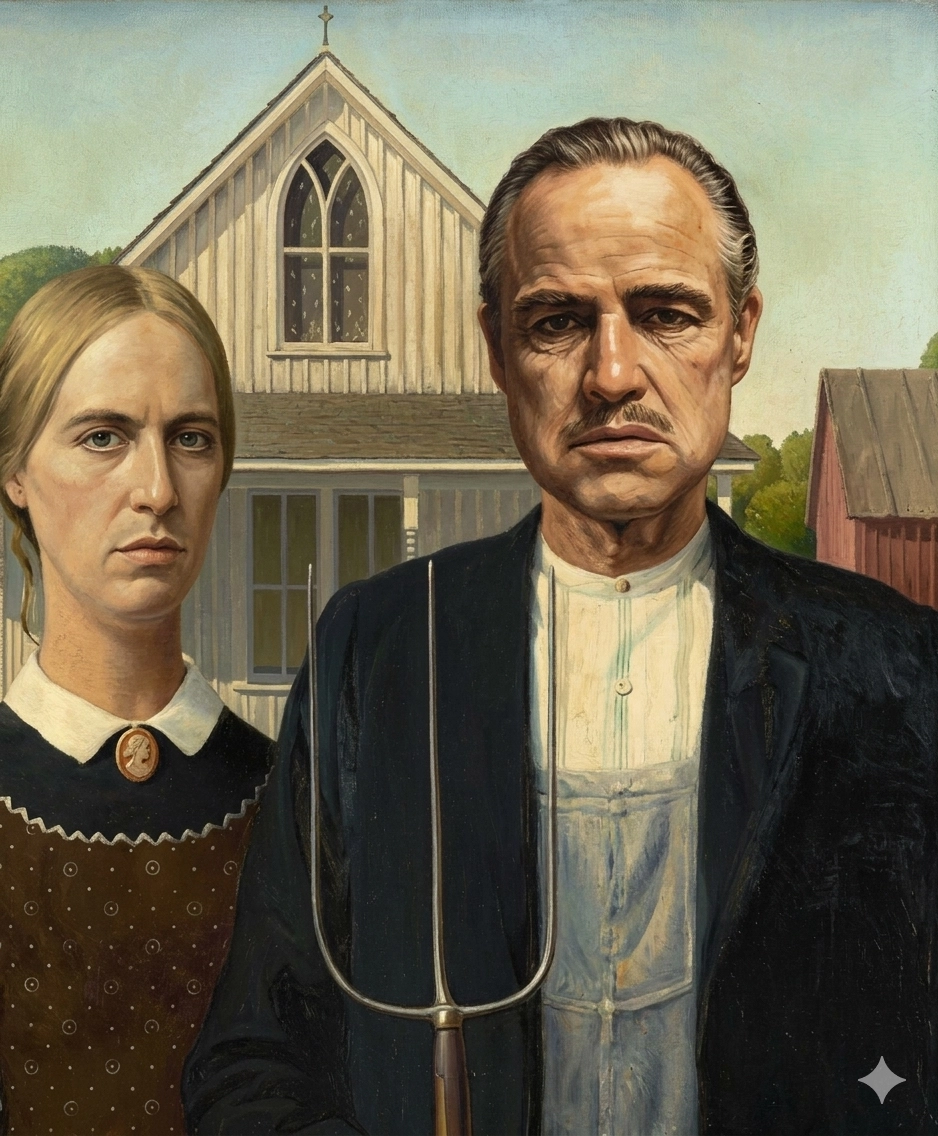
The Godfather Part II & American Gothic

An example of Francis Ford Coppola’s brilliance.


Francis Ford Coppola’s 4 movie run is among the most impressive artistic feats in history. Within that run is 1974’s epic, “The Godfather Part II”, starring De Niro, Pacino, Duvall, Diane Keaton,  and much more.


The Godfather series is very Shakespearean. While the first tells the tragedy of Michael Corleone’s downward spiral by reluctantly following his father’s footsteps, Part II fleshes out Michael’s fall decades later. However, the real genius of Part II isn’t in Michael’s dealings with Hyman Roth, it is in the flashbacks of Michael’s father, how Don Vito came to be and his rise to glory.


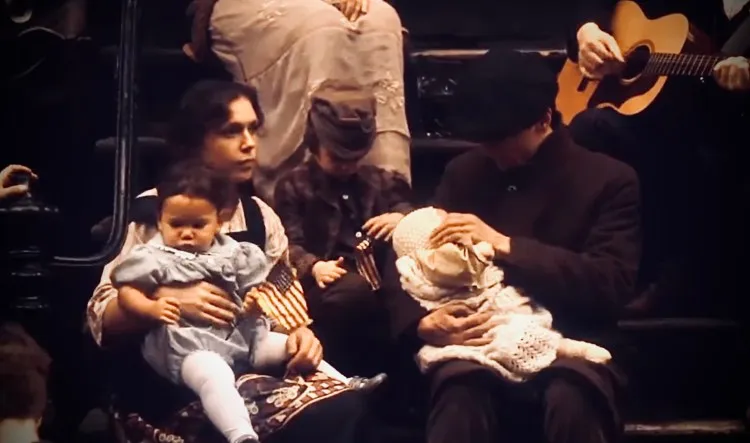
A scene from “The Godfather part II” directed by Francis Ford Coppola (1974)

In the scene above, we see Vito cradling baby Michael with blood on his hands. This shot is moments after Vito assassinated the mobster oppressing his family. Yet, there is still a wave of pessimism in the air. The pessimism arises from Vito’s reality, he’s merely traded one form of oppression for another. Sure, he’s no longer under the mob’s thumb, but now he’s subject to the American capitalist spirit, the culture that permits you to take what’s yours in the name of freedom. The shot is eerily reminiscent of the famous painting “American Gothic” by Grant Wood, which depicts the steadfast, emotionless American spirit the rest of the world has become subject to.


Here, Vito tells Michael everything he’s done, is for him. This line captures the theme of the series; duty to family versus country. Vito, raised in the old country was taught family takes precedence.  Michael on the other hand, rejecting the sins of his father, saw the fight for freedom as the virtuous path, hence why he fought in WWII (against Italy). Vito didn’t want his son fighting for his country, nor did he want him to follow after him.  Ultimately though, Vito’s sins spill onto Michael, just like the blood on his hands. In the end, he’s left with a country fighting against him, and no family around to console him.


This mere frame captures the essence of The Godfather and is an example of why Coppola’s aesthetic eye rivals anyone in history.