While I was in university looking for internships, I stumbled across the media company Embreate, and their award-winning brand Future Now. Future Now is a Science-Fiction based content creation team that seeks to explore the future through the lens of storytelling.
Being the Sci-Fi nerd I am, I knew it was the perfect fit for me to begin my media career. So I put everything I had into my application & eventually landed a role as an intern video editor.
That was a few years ago. Since then, Scott (the creator of Embreate) and I have worked together on a variety of projects, and I’m happy to say he’s became a mentor and friend.
Anyways, while Embreate has focused their attention behind the scenes, as of late they took a backseat on content creation. While producing other projects, the Future Now social medias ended up going cold, leaving their audience hanging.
Scott has asked me to change this and bring Future Now back to life.
Instead of going Dr. Frankenstein on the operation, the two of us have decided to take more of a Dr. Morneau approach instead. What I mean is, we’ve decided to rebrand FN.
While Future Now used to be an interactive Sci-Fi concept where creators all across the world wrote & produced their stories in an ever-connected universe. It is now the hub for exploring the all things related to the future, through the lens of storytelling.
Scott & I don’t just want to create stories for the sake of creating stories. We want to create content that actually seeks to examine & solve today’s most crucial problems. This is exactly what all quality Sci-Fi does right. They don’t just ask “What If”, they ask “What Now”.
In order to explore the future, we can’t just rely on the stories we & our team creates. So we’ve decided to bring it back to the basics and explore What Has Sci-Fi Taught Us from it’s infancy.
Along with uploading our stories to our ever-expanding Patreon, we’re also beginning to create Sci-Fi related content exploring the genre’s greatest masterpieces, unpacking what makes them so transcendent, and how these stories have impacted & predicted the future.
Scott & I have been A/B testing a variety of methods to go about this. One such method is a “What Has Sci-Fi Taught Us” podcast where we pick a random Sci-Fi topic and go ham discussing everything we can about it.
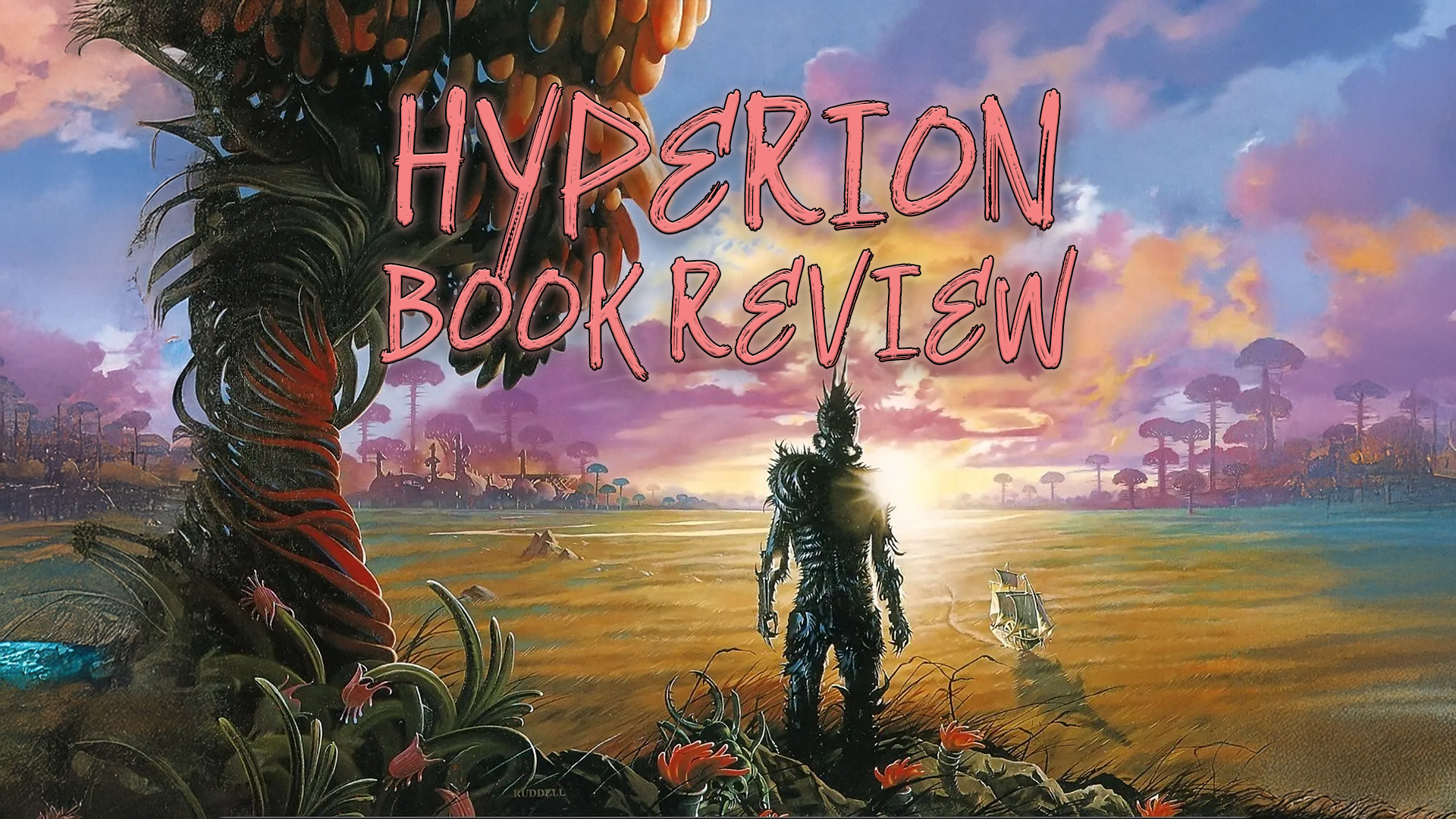
As a trial run, we decided to record a podcast on one of my favorite Sci-Fi books, Dan Simmons’s “Hyperion”. We’ve started uploading clips from the test-pod, you can see them below.
“The horror! The horror!” – Captain Kurtz, (Part III, Page 12)
Introduction
Written in 1899 by Joseph Conrad after his journey up the Congo River, Heart of Darkness is a fictional recount of the colonization of the Congo by King Leopold II of Belgium. The book is one of the most impactful stories of our time, most famously known to be the inspiration and the original adaptation of Francis Ford Coppola’s Apocalypse Now. That said, everywhere the book goes, its controversies follow. To some, it may be the modern Moby Dick its supporters claim it to be. But to others, it’s a vile, racist piece of literature that emphasizes the atrocities of the 2nd Industrial Revolution. To me, it is the harshest, most frightening, and arguably the most evil story I’ve ever read. However, it is also one of the most important.
Heart of Darkness masks itself as an adventure story through the Congo River, which is why I decided to read it in the middle of the Canadian outback four hours away from my city, Toronto. But in reality, it is a journey into the psyche that leaves no stone unturned in its quest to expose the shadows underneath the soul. Heart of Darkness clashes the most heinous aspects of humanity with such poetic prose I was left dumbfounded. How can an individual [Marlow] with such backward and contradictory ideologies have such a grasp on not just the self but society at large? Through coarse and painful writing that feels like a nightmare, Joseph Conrad shows us that this complex understanding of the human psyche and its inevitable corruption can be seen by those paying close enough attention. It doesn’t require some fantastical setting like the 19th-century colonization of The Congo Free State. It can be seen anywhere and everywhere, all it requires is a keen perceiver.
Plot Overview
Heart of Darkness is a story within a story. Taking place at the turn of the 20th century, the book opens upon a tugboat on the Thames River where a seaman named Marlow recounts his adventure through the Congo river years prior. On this particular journey, Marlow was hired by the Belgian ivory trading company and tasked to traverse the Congo River in search of the ivory agent Colonel Kurtz who has seemingly vanished from his post leaving his superiors worried he has gone rogue. Kurtz is one of the most successful ivory traders within the African Jungles, netting significant earnings for the British while exercising their colonial interests. So, his sudden departure leaves tremendous profits on the table and triggers a range of fear and anger amongst his European contemporaries.
As Marlow travels upriver deeper into the Congo, he sees the European conquest of Africa for what it was—a depraved, inhumane exercise of tyranny where greed and corruption masked themselves as tools for survival. At his first meeting post, Marlow encounters Africans for the first time and sees how they and their land are truly treated. They were forced into slavery to pillage their land just for their resources to be shipped to Europe. The Africans were viewed as a subhuman species. Marlow himself is prone to these same prejudices. Though he sees what’s happening as morally wrong, he views it more like taking candy from a baby so to speak. He’s just as ignorant of the cultures within the Congo and their ways of life as any other European conqueror.
“They were no colonists; their administration was merely a squeeze, and nothing more, I suspect. They were conquerors, and for that you want only brute force – nothing to boast of, when you have it, since your strength is just an accident arising from the weakness of others. They grabbed what they could get and for the sake of what was to be got. It was just robbery with violence, aggravated murder on a great scale, and men going at it blind – as is very proper for those who tackle a darkness. The conquest of the earth, which mostly means the taking it away from those who have a different complexion or slightly flatter noses than ourselves, it is not a pretty thing when you look into it too much.” – Marlow
Roughly halfway through his journey upriver 100km deep into the Congo, Marlow’s boat breaks down and he’s forced to dock it while making repairs. Here, he learns more about the man Kurtz and develops a strange fascination not just with him, but with the jungle that has swallowed the man whole. Within the shadows of the jungle, power is free for any man willing to embrace the darkness. We learn Kurtz is a man who not only embraces said darkness, but thrives in it. Kurtz isn’t your typical ivory agent pseudo salesman, he’s a conman of the largest degree, one who twists and bends the branches of the jungle to his whim. Instead of wielding blatant violence to colonize the land and the people like the majority of his contemporaries, he uses his presence. He has molded his face in the shape of a god to his innocent victims, offering them a life with purpose, their purpose being to bow down and serve the deity that so happens to be this white man named Kurtz.
After fixing the tugboat, Marlow and his crew travel closer to their destination where they’re suddenly hit with a barrage of arrows. Though some of his crew parishes, Marlow survives and they push onward until they finally reach Kurtz’s last known destination. Unlike the rest of the station camps, Kurtz’s camp is much more fleshed out, like an oasis in the middle of the desert. The first individual Marlow comes across is a Russian who stumbled into the heart of the Congo on a Dutch exhibition years prior. The Russian, who has taken care of Kurtz during a bout of sickness, believes wholeheartedly in Kurtz’s greatness. He is one of the few individuals to witness Kurtz’s ascension, from ivory agent to God. Kurtz offered the Russian what no other man did, a purpose, an ideology to subscribe to. The Russian divulged that the Natives of the Congo attacked Marlow’s boat because they didn’t want Kurtz to leave. Through his rituals and his words, Kurtz’s standing as a god among men infects all, whether you are from the depths of the Congo Free State or the Tsarist autocracy of Russia.
Before entering Kurtz’s hut, the Russian asks Marlow to crawl, a ritual all of Kurtz’s followers must do if they wish to speak to the deity. Dumbfounded, Marlow refuses to give in to Kurtz’s rituals. Suddenly, Kurtz is carried out on a stretcher and brought directly to Marlow’s boat where he tells Marlow he is glad to see him, indicating he knew Marlow was coming all along. Clearly, Kurtz is beyond a mere case of sickness and is on the brink of death. Kurtz argues with the ivory company manager, one of Marlow’s crewmates and superiors, claiming they are only here for his ivory and do not care for his life. The boat quickly gets moving and Kurtz is returning to civilization.
Docked in the middle of the night for rest, Marlow wakes up to the sound of drums and the sight of fire on the nearby shore. Immediately weary of Kurtz and his pilgrims, he checks Kurtz’s stretcher to find he has vanished. Following a trail, Marlow discovers Kurtz crawling on all fours, mere feet away from the native’s camp. Marlow contemplates strangling him right then and there, knowing the natives would hear and quickly kill him too. He decides not to not because he is worried for his fate, but because he too, like the Russian and the people of the Congo, genuinely sees Kurtz as a remarkable individual. Marlow’s infatuation with Kurtz isn’t Godlike, but he recognizes that he is the only thing standing between Kurtz and his final step into madness. He is so far removed from the European civilization that he and Marlow were raised on, to judge him right or wrong, to either let him embrace the darkness of the jungle or to kill him right there, is a futile juxtaposition. The man infected by the heart of darkness has seemingly “kicked himself loose of the earth,” he is free from any sort of judgment and preconceptions society deems. By letting go of everything, he opened the door to madness.
Kurtz, overwhelmed with sickness and the grief of his foiled plans, follows Marlow back to the steamboat, and they proceed downriver. Left with nothing but his ideas, Kurtz spills his philosophical musings to an eager Marlow, who is left both profoundly moved and painfully irritated. Kurtz’s grandiose theories on everything from love to the economy are littered with childish aspirations of fame and fortune, revealing the contradictions that lie within the Heart of Darkness. Eventually, Kurtz foresees his death and delivers one of the most famous and debated quotes in all of fiction before perishing on that steamboat.
“It was as though a veil had been rent. I saw on that ivory face the expression of sombre pride, of ruthless power, of craven terror—of an intense and hopeless despair. Did he live his life again in every detail of desire, temptation, and surrender during that supreme moment of complete knowledge? He cried in a whisper at some image, at some vision—he cried out twice, a cry that was no more than a breath: ‘The horror! The horror!’” – Marlow
After Kurtz’s death, Marlow gets violently sick himself. On the brink of death, Marlow realizes what makes Kurtz so remarkable. Marlow had nothing to say, of himself, or his ideas. If he were to die, he would be transplanted back into the earth in the same fashion he was born from it. Kurtz on the other hand, the man who “kicked himself loose from the earth” had everything to say, and so he did. To Marlow, Kurtz through his descent into madness let go of everything, but in doing so found himself, something most individuals spend their lives chasing. In himself was surely a heart of darkness, but said heart was pampered with candor and conviction. The darkness made him blind to the subjectivity of the world we’ve built, but painfully aware of the objective truths of the universe.
Historical Significance; The Scramble For Africa
Cetshwayo, king of the Zulu, under British guard after the end of the Anglo-Zulu War in Southern Africa, 1879. Drawn by F. Daad.
Heart of Darkness (1899) takes place amid the 2nd Industrial Revolution (1870-1914). This period was characterized by rapid industrialization, technological advancements, and social changes that were built upon the innovations of the First Industrial Revolution (which occurred from the late 18th to early 19th centuries). Essentially, new sources of energy like electricity, oil, and gas led to breakthroughs in the production of steel. Subsequent innovations like railroads, cars, ships, and planes, as well as communication devices like the radio and telephone, began sprouting up across the world. This was the first time in history we could communicate and travel across vast distances, leading to the first instances of globalization. Governments were quick to realize that these newfound technological advancements required tremendous amounts of resources to be deployed effectively. Europe simply didn’t have the raw materials necessary to produce their industrial goals. At the same time, the major players within the continent (Belgium, France, Germany, Britain, Italy, Portugal, and Spain) were in skirmishes amongst one another trying to flex their imperial power. For example, events like the Congress of Vienna (the fall of Napoleon), The Franco-Prussian War (France vs. Germany), and the unification of Italy and Germany all led to bitter resentment among the major European factions.
After seeing the success of the British in the Americas and India, in the 1830s France makes the first move towards Africa by occupying Algeria. After colonizing Algeria, France moved eastward to take Tunisia, provoking Italy to join in this conquest. While France and Italy wage war over Northern Africa, King Leopold II of Belgium announces his plans to “rescue” The Congo Free State. Unlike the other European empires, King Leopold II vowed not to make it a part of the Belgian empire, but instead, chose to make it his own domain so that he personally could “aid and civilize” the people of The Congo, presenting his conquest as a humanitarian effort. King Leopold II’s reign over The Congo is known to be one of the most brutal, inhumane exercises of depravity known to history. While personally owning The Congo, the king netted over $200 million francs (over $1 billion in today’s money). There are so many lessons to be learned from this period of history, but the fact that he passed it off as a humanitarian effort goes to show how just how naive we humans can be.
After Leopold II of Belgium, also known as the “Two-faced King” announced his conquest of The Congo, the major European powers convened in Berlin to establish official claims for what is now deemed as “The Scramble For Africa”. Belgium, France, Germany, Britain, Italy, Portugal, and Spain all agree on makeshift borders representing the new reaches of their empires. The African kingdoms and rulers fought to retain control of their land, but 9 times out of 10 though they had the terrain advantage, they were overwhelmed by Europe’s newfound technological achievements like the inventions of bombs and machine guns. In just 40 years, Africa went from 10% European control to 90%. It wasn’t until the outbreak of World War I that European colonies began losing their grip on Africa. A wave of economic and military strains as well as increased scrutiny of colonialism and a growing African nationalist movement came together to dissolve European colonial control in Africa.
Responding to Controversies; Is HoD a Critique or Complicit in Colonialism?
It should be no surprise Joseph Conrad’s Heart of Darkness is a highly controversial book. It depicts the brutal injustices of King Leopold II’s reign over The Congo Free State from an entirely Eurocentric perspective. Routinely the African characters in the book are referred to as cannibals, savages, and “the others”, reinforcing racist tropes so prevalent at the start of the 20th century. Beyond the palpable racism portrayed by the book’s main characters, Joseph Conrad’s decision not to give any African characters a voice throughout the entire story represents the larger issue. The racist bigotry of the European colonizers would be far easier for readers to digest if we could juxtapose their sentiments with African characters and culture. But that never happens. The only perspective we see is the Eurocentric one, where the jungles of Africa are prehistoric and the people are primitive, compared to their civilized culture back home. It’s impossible to read Marlow’s journey as any sort of pro-colonization propaganda, but the question remains; Does Joseph Conrad’s Heart of Darkness do enough to present a sound critique of colonialism, or does it merely serve as a mundane reminder that this so-called “darkness’ is within all of us, as demonstrated through history?
In 1975, Nigerian novelist and poet Chinua Achebe wrote “An Image of Africa: Racism in Conrad’s Heart of Darkness”. Achebe’s scathing critique of Conrad’s story does an excellent job of highlighting its inherent biases. He does not hold back his disdain for the ignorant racist he believes Conrad to be. Achebe calls for a closer inspection of the constant juxtaposition at play. The first river we’re introduced to where Marlow tells his tale is the Thames River running through London. The Thames River is depicted as a place highly regulated for commerce, ordered, and civilized. Contrast this river with the Congo River where the heart of the story takes place. The Congo River is the antithesis of the Thames River, it is a chaotic mess, closer akin to the Wild West than any official trade route. The juxtaposition spreads to the supposed lack of laws and customs in The Congo compared to the much more “civilized and cultured” Europe. Everything we learn of Africa in the story only serves to be the foil for Eurocentric ideals. The very few actual Africans in the story not only have zero dialogue but serve as symbolic objects and superficial tropes to the “superior” European mind.
Chinua Achebe And His-Book “Things Fall Apart”
I believe Chinua Achebe does a better job explaining what’s flawed with the book better than I ever can, which is why I recommend reading his paper yourself. Achebe asserts that Conrad’s depiction of Africa in Heart of Darkness only prolongs the negative and stereotypical sentiments of Africa being this so-called place of “darkness” where savegry and bouts of evil are societal norms. Taking away the direct racism within the book, at first glance the story seems to be concerned with two individuals (Marlow & Kurtz) descent into madness when placed in a situation so far removed from what they consider home. Implying this inevitable “descent into madness” occurs when trolling through the uncivilized rivers of The Congo seems to come with a fair bit of veiled racism. It leads one to believe that the jungles of Africa aren’t fit for the cultured Europeans and it should be left to the wild Africans. It’s hard to ignore that interpretation, but by the end of the book, Joseph Conrad litters tidbits of clues within his philosophical monologues that seem to imply it wasn’t The Congo that brought madness on these Europeans, their madness was within them all along. On Kurtz’s deathbed, he utters delusions of grandeur, he talks of dining with kings and disseminating his ideas to the farthest reaches. So all this talk of Kurtz being the man who “has kicked himself loose of the earth” is total baloney. He’s just as conscious and longing for these arbitrary societal norms as before he ever stepped foot in Africa. In fact, he was so greedy for fame, fortune, and power, that he was willing to sacrifice everything else he knew and loved to move to Africa and manipulate its people. The insatiable appetite for more Kurtz demonstrates isn’t something that evolves over time, especially in a place like the 20th century Congo Free State where traditional lappings of luxury are few and far between. Kurtz’s ambitions were within him far before his time in The Congo. It’s these ambitions, part of the archetypical European colonial mindset that spurred his descent into madness. At its core, the book isn’t the adventure narrative it’s trumped up to be. It’s a psychological breakdown of what corrupts the soul. The answer to that question isn’t some fantastical setting like The Congo River during the 2nd industrial Revolution. It’s a far more nuanced answer that leaves you questioning your desires. It wasn’t The Congo that made these men mad, these men brought madness to The Congo.
The Darkness
If the true theme of the story centers around the human psyche, the recurring symbol of darkness within Conrad’s prose should be analyzed from a new perspective. Multiple times the novel’s main character Marlow uses darkness to describe his environment; The geography of the jungle, the color of its inhabitants’ skin, and the morality of their actions are all repeatedly described as dark. In storytelling, darkness is what we associate with evil. So, it’s easy to assume that in placing these characters in this “dark” situation, they are running head-first into evil. However, Conrad subverts expectations by juxtaposing the darkness of The Congo with the blinding lightness of European civilization. As Marlow’s journey progresses, the “enlightened” European society he comes from becomes more and more a facade, a superficial beacon of light that blurs the truths of colonialism behind the glitz and glare of economic progress. In Conrad’s story, the light represents a shallow reflection of false desires, while the darkness reveals, the deeper, more complex, and uncomfortable truths of humanity.
Conrad’s use of light and darkness not as a tool for disseminating good versus evil, but rather as a metaphor to critique Eurocentric ideals, plays directly into Carl Jung’s theory of the Collective Unconscious. The Collective Unconscious can be understood as this layer beneath our consciousness where we all share the same understanding of universal patterns that come intuitively with being human. The universal patterns we innately recognize come in the forms of symbols and archetypes. For example, the archetype of “the hero” as brave and triumphant doesn’t come from any culture, religion, or story. “The hero” is something we all understand regardless of our background. Another archetype we share is “the shadow”. The shadow represents the dark, hidden side of the human psyche, the part of us we wish to ignore. For example, traits like anger, fear, greed, or being self-conscious are all things we may try to suppress. We don’t suppress these traits because they are inherently evil or morally bad, but only because they don’t align with how we want to be perceived. Although everyone’s shadow is comprised of individual experiences, the mere fact that we can recognize this shadow as an archetype proves that it lives in the collective unconscious. Carl Jung believed that to become a healthy person psychologically, one must confront the shadow and integrate it into their conscious awareness. This is exactly what Marlow went through on his journey through The Congo.
The light of Europe represents conscious awareness while the darkness of The Congo symbolizes the collective unconscious. Our conscious awareness pampers us with falsehoods and ideals whether it be on a personal level; i.e. “I’m not selfish”, or on a societal level; I.e. “We are civilizing The Congo”. While the collective consciousness, free from any rational constraints, lets loose the archetypes and shows things for what they really are. Here, the shadows reveal themselves as the ugly truths we try to sweep under the rug. When Marlow traverses through The Congo, he has no choice but to confront the darkest aspects of human nature; the cruelty, greed, and lust for power go hand in hand with the enlightened and civilized European culture. While The Congo is a symbol of the collective unconscious, Kurtz is the physical embodiment of Marlow’s shadow and everything he and Europe sought to suppress. Kurtz was once a man status, enlightened by Eurocentric ideals. But when he faced the darkness he abandoned his conscious beliefs and embraced his primal instincts. In Jungian terms, Kurtz lived up to the archetype of a tyrannical god, cementing himself within the collective unconscious. But when Marlow confronts his shadow, Kurtz, he sees in him his potential for darkness, an inescapable truth. While Marlow confronts his shadow, Kurtz is consumed by it. Kurtz’s absolute will to power blinded him to the truth, just like how the enlightened Europeans were blind to what was happening in The Congo. It isn’t until Kurtz’s famous last words on his deathbed, that he finally decides to see the darkness for what it is, thereby confronting his shadow.
Summary
When I picked up the book that inspired one of my favorite movies I knew I’d be in for a ride. But the downright racist and evil one-sided depiction of the colonization of The Congo is not at all what I expected. It caught me so off guard I had no idea what to make of it. In fact, immediately after finishing, I rated it 1 star on Goodreads. But it’s been over a month and I still can’t get the story off my mind. For better or for worse I’ve always believed that the more a piece of art provokes you, the more important it is. That said, the more I’ve thought about this story the more I come to grips with its purpose and see it for what it is. A horrific fictional account of one of the most brutal periods of history, but also a necessary one. Just like Goya’s Saturn Devouring His Son, or Caravaggio’s Judith Beheading Holofernes, it’s a haunting portrayal of our past. Without such works of art, our perceptions of the past would change, hindering our understanding of reality today. Joseph Conrad’s Heart of Darkness forces you to face the uncomfortable truths of reality, acting as a collective shadow overcasting society. Through this story, Conrad shows us that there is a period in time before the abyss gazes back into you where you can discover the truth within the darkness.
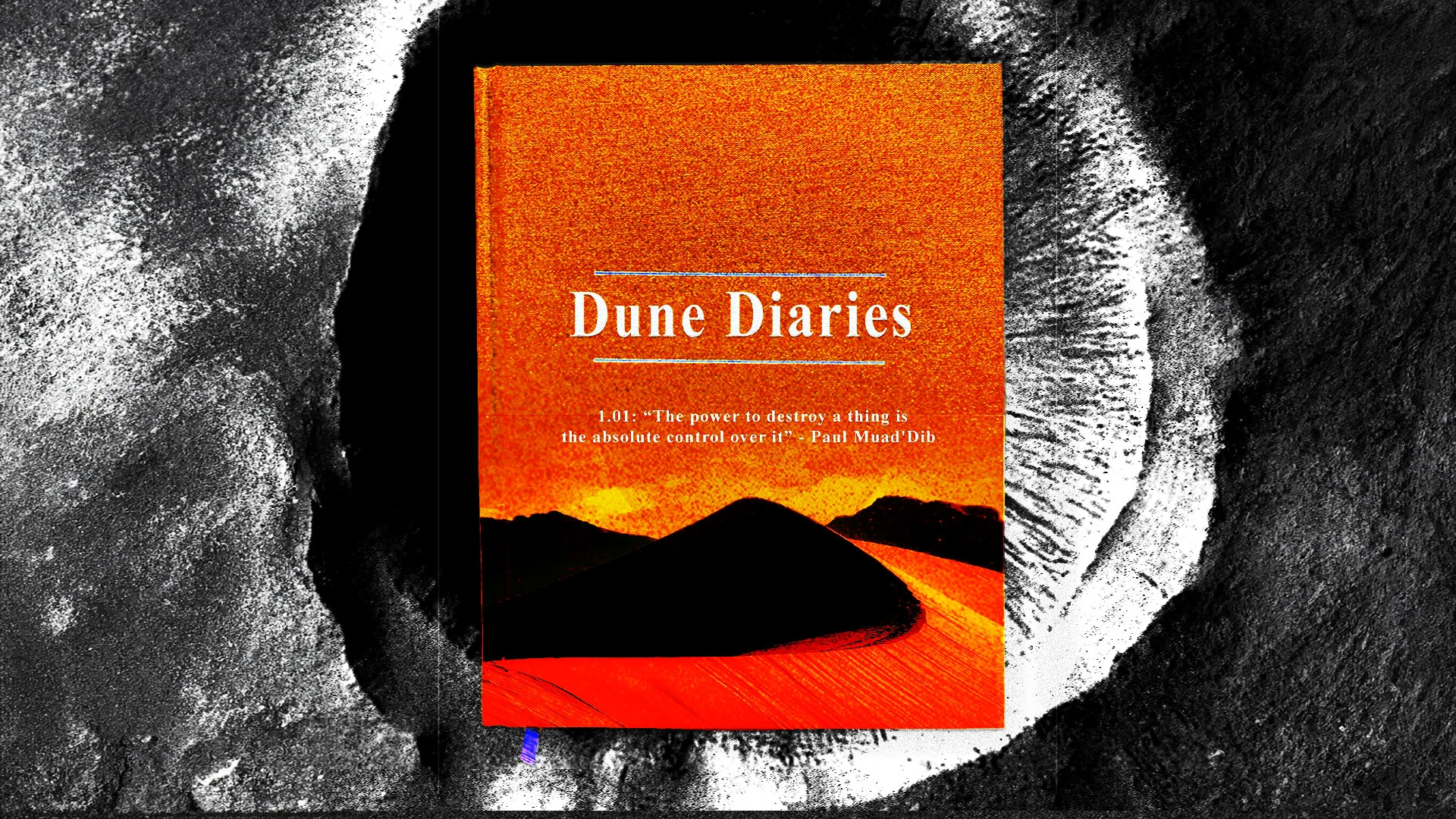
An analysis of Frank Herbert’s (in)famous quote featured in the first Dune book & the second film.
Art by Marc Simonetti
“The power to destroy a thing is the absolute control over it”
– Paul Muad’Dib,
This line comes in the tail end of the second dune film and is a direct quotation from the original book. This is about Paul’s threat to nuke the spice reserves on Dune and subsequently topple the patriarchy of the great houses of the Landsraad and the rest of the Imperium. Spice is the drug harvested on Arrakis, representing the greatest export in the Dune universe. It prolongs life, gives one the ability to see the future, and allows “guild navigators” to bend space-time to access interplanetary travel.
Of all of the controversial quotes uttered by Frank Herbert’s character, Paul Atreidies in the first Dune book, this one has always stuck out to me, and I was beyond happy to see its place in the movie. If you critically analyze the quote, the logic seems dubious at best:
To destroy something is to attack it.
An overabundance of evidence in history and military theory has shown humans it’s far easier to defend than to attack.
Having control over a thing refers to the degree of influence one has on it.
The easier one can influence something, the more control they have over it.
Therefore, having “absolute control” over a system would be to defend it, not to attack and destroy it, hence Paul is wrong in his assessment.
This asks the question, why would a character like Paul Atreidies commit such a fallacy when the stakes are so high? The same Paul Atreidies who has trained as a mentat (human-computer), practiced the bene gesserit rituals and has unlocked not only all of his ancestors’ memories but all the possible futures as well. Those who have read the preceding books may be able to answer this question, but for those who still need to, let me assure you, it is not lazy writing by Frank Herbert, it’s very much the opposite. Without going into spoiler territory for the other books and future movies, allow me to explain.
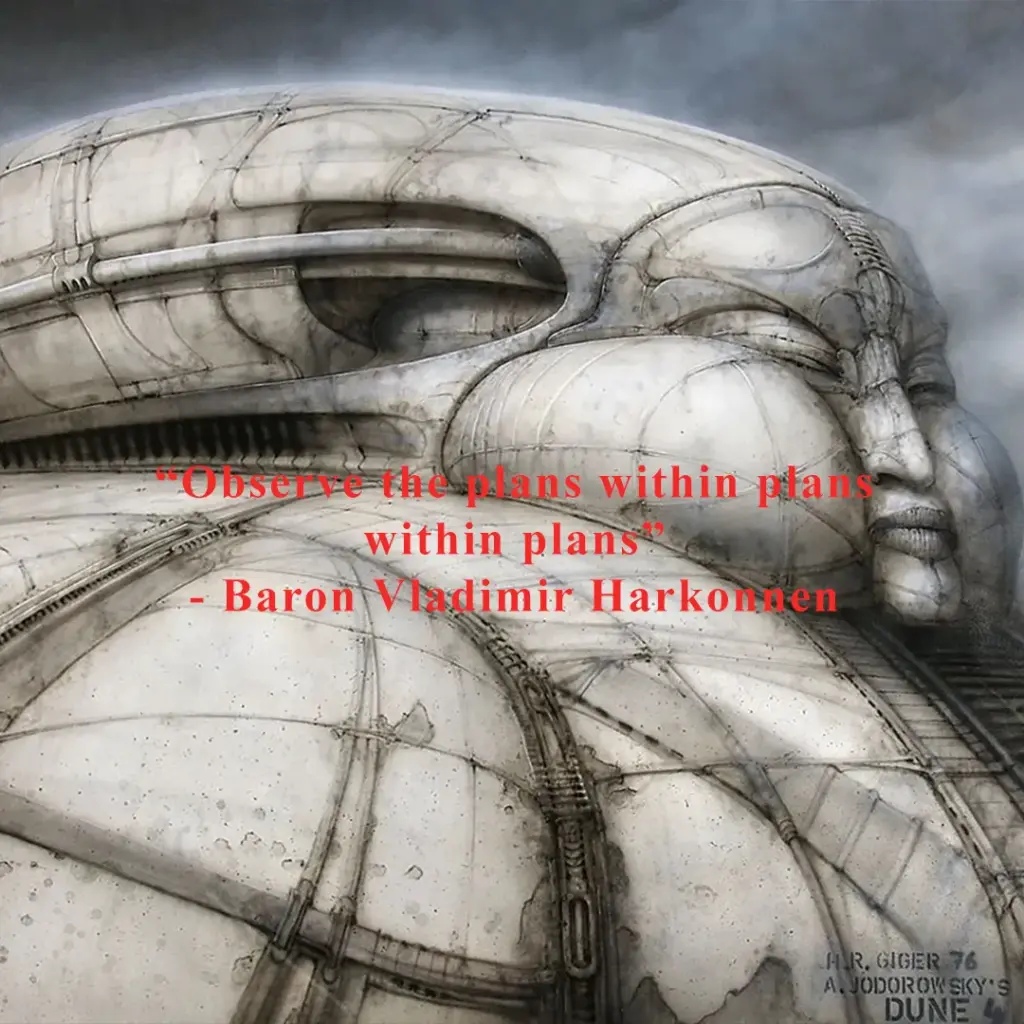
“Observe the plans within plans within plans”
– Baron Vladimir Harkonnen
“The thing the ecologically illiterate don’t realize about an ecosystem is that it’s a system. A System! A system maintains a certain fluid stability that can be destroyed by a misstep in just one niche.”
– Pardot Kynes – “Appendix I: The Ecology of Dune
When Paul says “the power to destroy a thing is the absolute control over it”, he isn’t referring to just the spice reserves, it extends to the power system that the spice is a finite extension of. In part 1, young Paul witnesses how economics (the Guild/CHOAM), politics (The Landsraad), and religion (The Bene Gesserit) can unite to produce a power so chaotic it can obliterate those under its whim. Pardot Kynes’s quote above exemplifies how Frank Herbert pictured this power structure. Just like in ecology, one simple misstep is enough to topple an entire system.
Paul, after reluctantly following his Bene Gesserit mother’s lead, manipulates the Fremen into being their prophet thereby controlling their religion. Then, using his religious power, starts a guerrilla war in the desert with the Fremen to destroy the Harkoneen spice reserves, ousting their economic power. Uniting his religious and economic power, Paul calls for a Jihad, an all-out invasion of the final third of the system, its political power. Though at this point it’s understood Paul’s fedaykin and sandworms have the prowess to defeat anyone in the entire universe, The Landsraad makes it clear they will not simply abide by his demands. Paul, being the prescient being he is, knew how this would shake out, and used the quote as an empty threat. Paul relies on the spice for his religious and economic power just as much as the imperium for its political power. Though he knows this, The Landsraad does not. By threatening one niche component of the system it was destroyed just as Pardot Kynes predicted, and Paul’s jihad succeeds before it even begins.
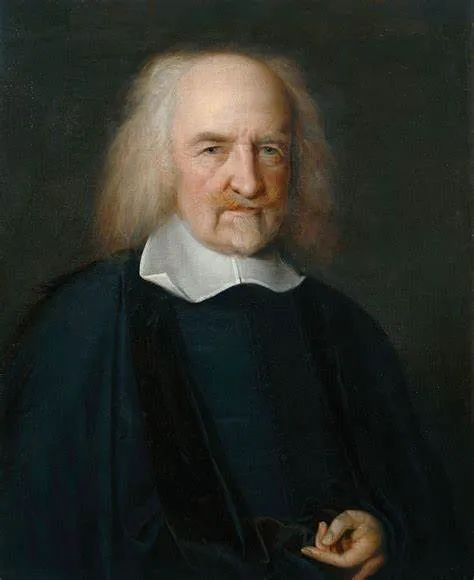
Among many things, Dune is a treatise on power expanding on the works of thinkers like Thomas Hobbes. Thomas Hobbes was a political philosopher who lived through the English Civil War and witnessed the beheading of King Charles the 1st. Due to his experiences in the war, Hobbes was a staunch pacifist and argued that supreme authority was a right limited to humans. Hobbes argued that authority is necessary no matter how tyrannical it is because it produces order which is a far better alternative to chaos. Hobbes takes this point even further arguing that if a ruler is tyrannical, it is not the ruler’s fault but his people, for if people could rule themselves there would be no need for a governmental structure. Hobbes’s theory may be bleak, but it seems to hold up in court. We only have to look across the Mediterranean to the Middle East for an example of his argument in action today. But at the same time, Hobbes’s theory seems to only account for about half of history’s declarations of war. Sure Hobbes logically cripples revolutions, but what about the wars started by those in power? According to Hobbes, the people are required to swear obedience to those in power. If those in power declare war, the people will inevitably produce the same type of chaos Hobbes is trying to avoid. Circling back to the duneiverse, it was Emperor Shaddam who first declared war on the Atreides by granting them the fiefdom of Arrakis. Emperor Shaddam being a puppet and a shell of a leader presents an obvious (albeit weak) rebuttal to Hobbes. But does Frank Herbert not contradict himself by replacing Paul with the Emperor? Sure Paul may be a much more benevolent and charismatic emperor than Mr.Shaddam, but he’s an emperor nonetheless.
Thomas Hobbes, detail of an oil painting by John Michael Wright; in the National Portrait Gallery, London
“Some have decried Dune as an exemplar of the most toxic tropes lurking in science fiction, calling the novel an orientalist fever dream, a pean to eugenics, and a seductive monument to fascist aesthetics; others look at the same text and see an excoriation of hero-worship, a cautionary tale of revolutionary dreams betrayed, and a warning about Indigenous sovereignty subverted by a charismatic charlatan.” – Joshua Pearson, The Tribune The Contested Politics of ‘Dune’ (tribunemag.co.uk)
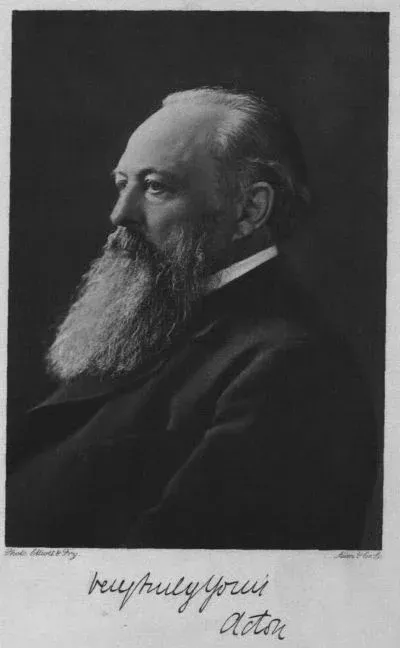
There’s something fascinating about a book that can produce such powerful reactions to diametrically opposed ideologies. Again, those who have read the latter books have a better idea of Herbert’s stance on Hobbes’s authoritarianism. However, without going into spoilers I will do my best to paint of picture of Herbert’s insights from the first two movies (book 1) alone. To do this I’ll bring up another political philosopher, England’s Lord Acton. Lord Acton is famous for the quote “Power tends to corrupt, and absolute power corrupts absolutely”, implying that Hobbes’s authoritarianism won’t get society anywhere. It’s also worth noting Lord Acton was a Confederate and saw Abraham Lincoln’s and the North’s cause as radical tyranny. Obviously, Acton’s politics did not age well, but, his famous quote certainly did. We’re all weary of the evil stirring in the “villains” of the world; the Harkkonens, the Putins, or the Kim Jong Un’s. But what of our heroes, should we not be weary of them as well? Blindly following Paul’s threat to nuke the spice reserves, whether he goes through with it or not, will lead to chaos to an unimaginable degree, a galactic-wide Jihad. Critically analyzing the threat on the other hand proves not only is it illogical, but an empty threat at that. Paul’s prescience only gets him so far, he is playing the political game as much as the rest of them, but only he can see the ensuing effects.
If Paul is the only one aware of the chaos ensuing due to his decisions, he is to blame. Therefore, if Paul creates the chaos he envisions, Hobbes’s authoritarianism fails miserably. This is one of the thought experiments Frank Herbert asks you to enter in the climax of the first book. Hidden between the lines, the plans within plans begin to reveal themself, but only to those paying the utmost attention.
Paul’s military quest was merely a distraction for his Coup d’état. His logical fallacy “The power to destroy a thing is the absolute control over it”, is a veiled threat meant to manipulate his opponent’s emotions and to make a play for the imperium’s political power. At this moment, Herbert’s complex and sometimes even contradictory ideologies begin to unravel, forcing us to look inward at our perceptions of the hero of the story. To some, Paul is the greatest liberator to walk Arrakis, while to others, he’s the fiercest tyrant.
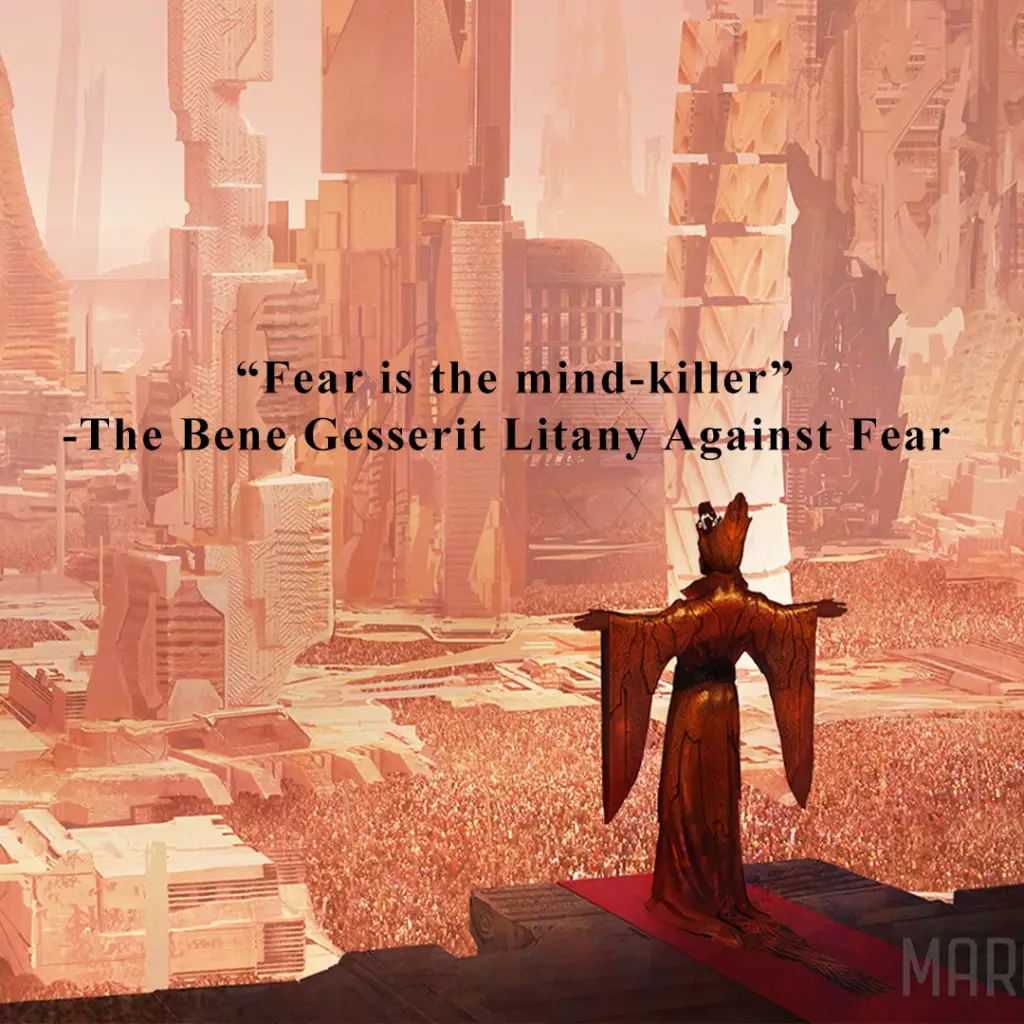
“Fear is the mind-killer”- The Bene Gesserit Litany Against Fear
If you’re still unconvinced by Frank Herbert’s writing prowess, let me refresh you on the Gom Jabbar, the needle Reverend Mother Gaius Helen Mohiam forces against Paul’s neck as he sticks his hand inside the torture box. “Gom Jabbar” translates to “The High Handed enemy”, and is a needle dipped in cyanide designed to bring instantaneous death. We see the Bene Gesserit use the Gom Jabbar to test Paul’s humanity, specifically whether or not his awareness can overcome his animal instincts. If Paul pulled his hand out of the torture box to relieve the pain, his animal instincts would prove too strong and he would die, like a mouse squirming out of a trap. But having sufficient knowledge and awareness of the situation means you have no choice but to endure the pain to live on. As we know, Paul succeeds the Gom Jabbar test and qualifies as a “human” in the eyes of the Bene Gessereit. However, we also know that in the eyes of the Bene Gessereit, Paul is a failed experiment, the product of a defector who knowingly disobeyed the Sister’s orders and foiled the Bene Gesserit 1000+ year eugenic plans. So why is it that when Reverend Mother Gaius Helen Mohiam has the Gom Jabbar to Paul’s neck, she doesn’t kill him right there and finish off the plans she and Emperor Shaddam set forth in the first place? To frame this in another context; Gaius Helen Mohiam has “The power to destroy [Paul], by having absolute control over [him]”, yet she chooses not to without making it clear why.
Reverend Mother Gaius Helen Mohiam chooses not to destroy Paul because she doesn’t believe in Paul’s philosophy. Through their actions, she and the rest of the Bene Gesserit demonstrate having control over a thing is far more than having the ability to destroy it. The religions they’ve manipulated across Arrakis and the Imperium have cultivated an order more benevolent than the alternative. The seeds they’ve planted in the form of rituals and words across cultures produce a far more stable sense of control than destroying whatever power relies on. They recognize dangling the sword of Damocles over their subject’s head will only get them so far. To the Bene Gesserit, destroying a thing is not gaining control over it, that’s like amputating your arm because of a paper cut. A rash, impulsive, and borderline animal instinct to a human problem. A far more appropriate play is to adapt to the wheels of power and to conspire within it. If this Frankenstein creation named Paul Muad’ib turns out to be the Kwisatz Haderach they’ve been prophesying for thousands of years, killing him would be blasphemy, an unimaginable waste of power, like throwing out the world’s fastest computer. The possibility of controlling such power gives the Bene Gesserit delusions of grandeur, visions of a utopia they prophesied centuries ago. Whether or not the Bene Gesserit succeeds in these plans is of little importance to Herbert’s philosophy. The Gom Jabbar is another thought experiment that goes beyond the old adage of what it means to be human, it also asks what control means to you, and why do we as humans seek it in such a primal fashion.
The quote “The power to destroy a thing is the absolute control over it” has been one of the more popular quotes in the first book among the fandom and for good reason. It is one of the first instances Herbert asks the viewer to look inward at their own perceptions of the hero. But without critical thought, it goes over many readers’/viewers’ heads, and they slowly slip into the same tragic hero-worship syndrome we see in the Fremen like Stilgar. Reading between each line the plans within plans slowly reveal themselves, and the scathing critiques of authoritarianism begin to penetrate the consciousness like sunlight poking through the fringes of a curtain. Herbert’s authoritarianism lies in the shadows unlike so much popular media and as a result, paints a much more apt comparison to how these political structures shape reality today. Depending on your situation, It’s easy to predict how politicians like Donald Trump through their sheer recklessness and determination will lead to chaos for example, but what about the seemingly benevolent leaders like Joe Biden? Do we blindly follow their lead because they have our best interests at heart, like Stilgar following Paul, or do we forego our desires and hold onto our principles, like Chani? History has taught us there isn’t an answer to this question, it depends on the individual. However, history has also taught us the lessons of philosophers like Thomas Hobbes and Lord Acton. The best we can do is learn from the knowledge of the past and rely on reason to guide us instead of our base animal instincts, the thing the Bene Gesserit try so hard to stamp out.
References
Brinton, Crane. “Lord Acton’s Philosophy of History.” The Harvard Theological Review, vol. 12, no. 1, 1919, pp. 84–112. JSTOR, http://www.jstor.org/stable/1507914. Accessed 17 Mar. 2024.
Harrington, Pat. “Brief Reflections on the Politics of Dune.” Counter Culture, 10 Feb. 2023, countercultureuk.com/2021/10/30/brief-reflections-on-the-politics-of-dune/.
Mosovsky, Jan. “Dune: A Story about Power.” 4liberty.Eu, Liberty Education, 8 Nov. 2021, 4liberty.eu/dune-a-story-about-power/.